
Last updated November 22, 2026
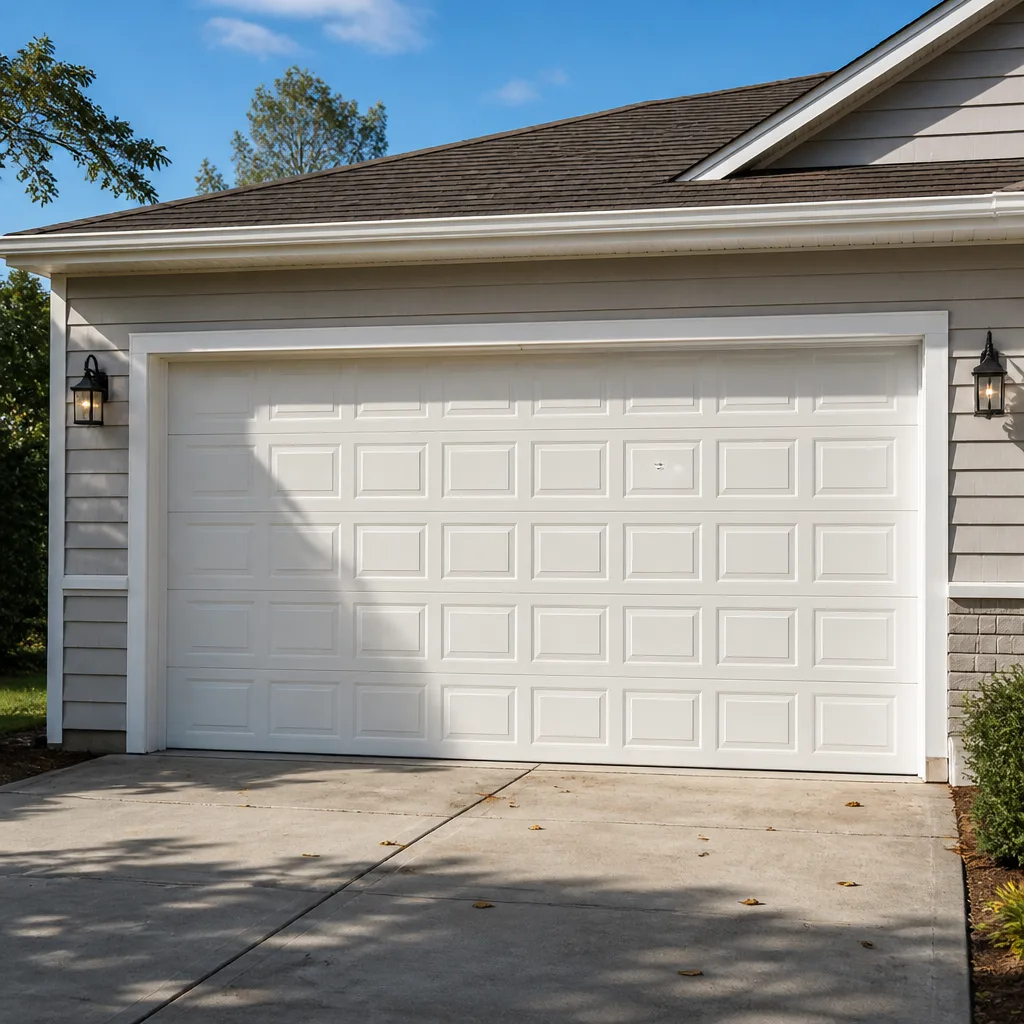 Raised-panel steel
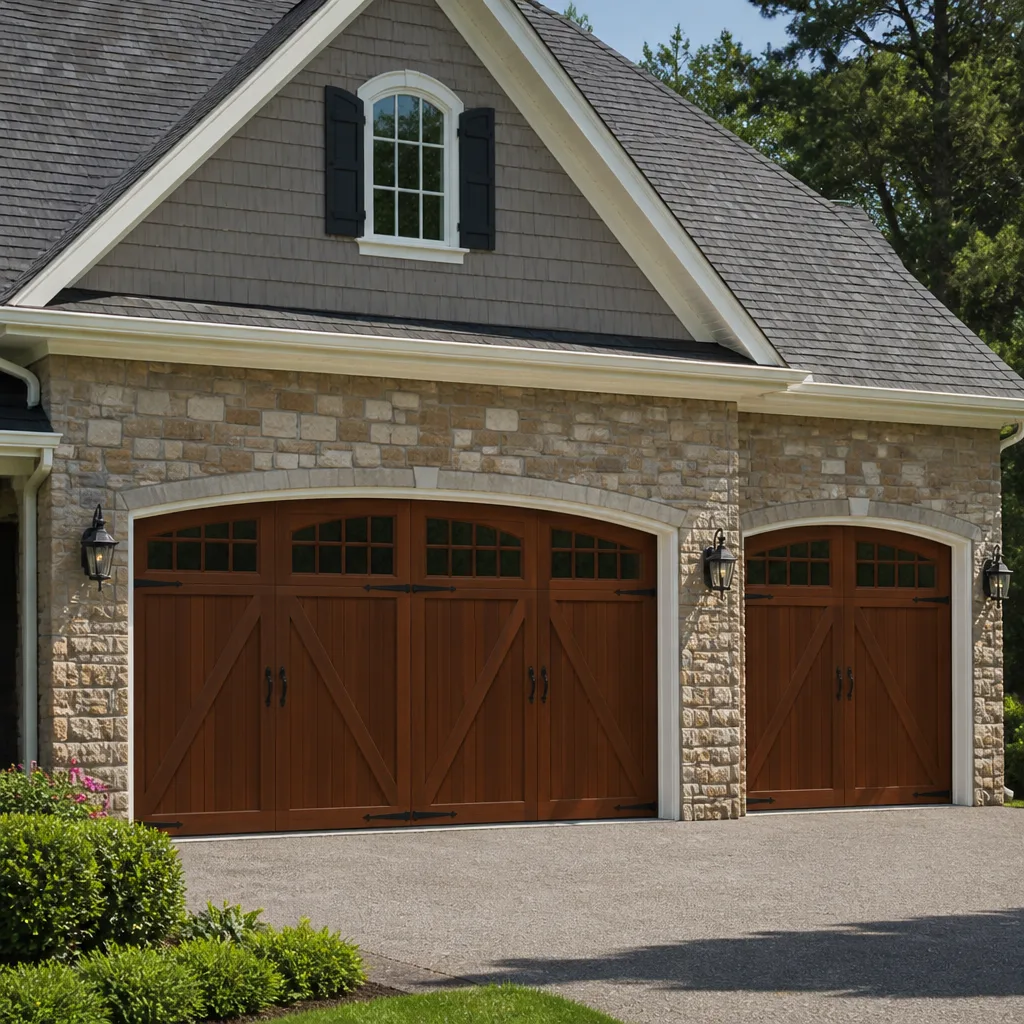 Carriage house
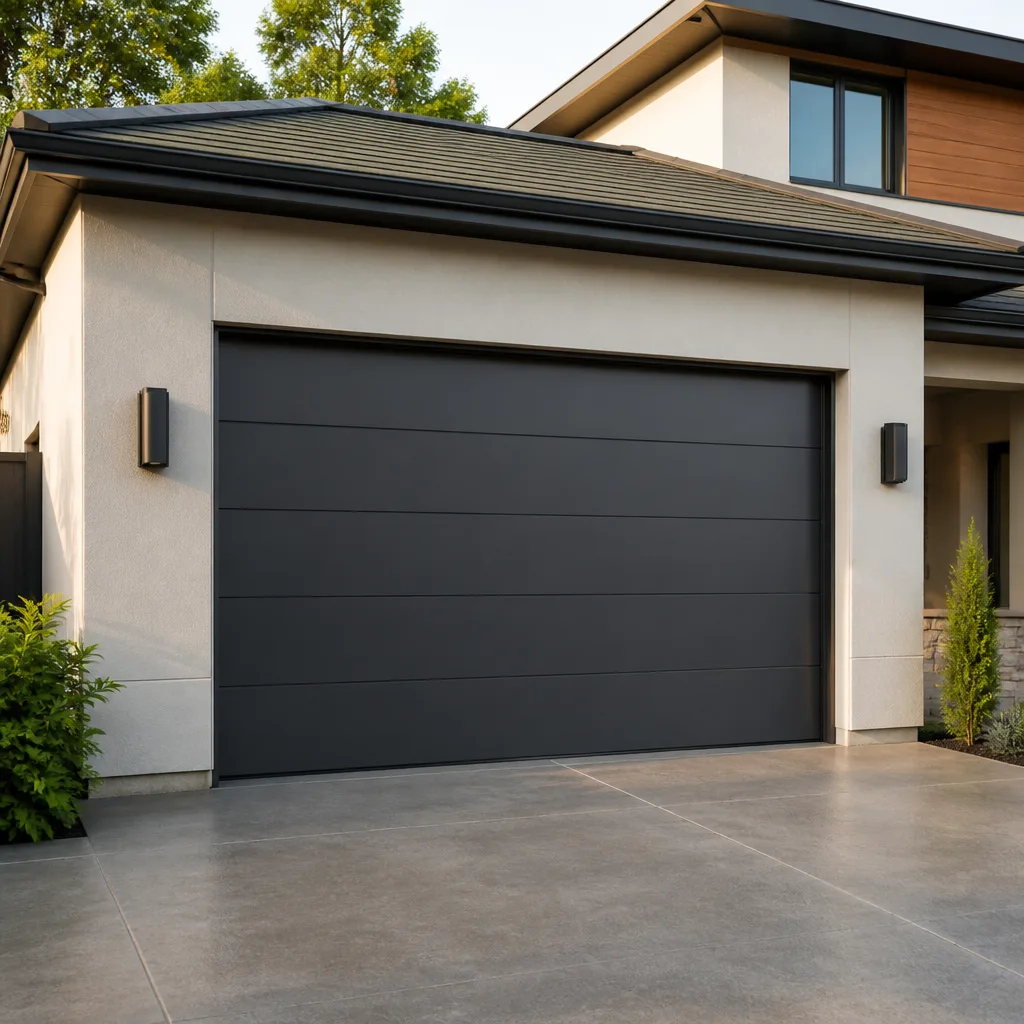 Modern flush
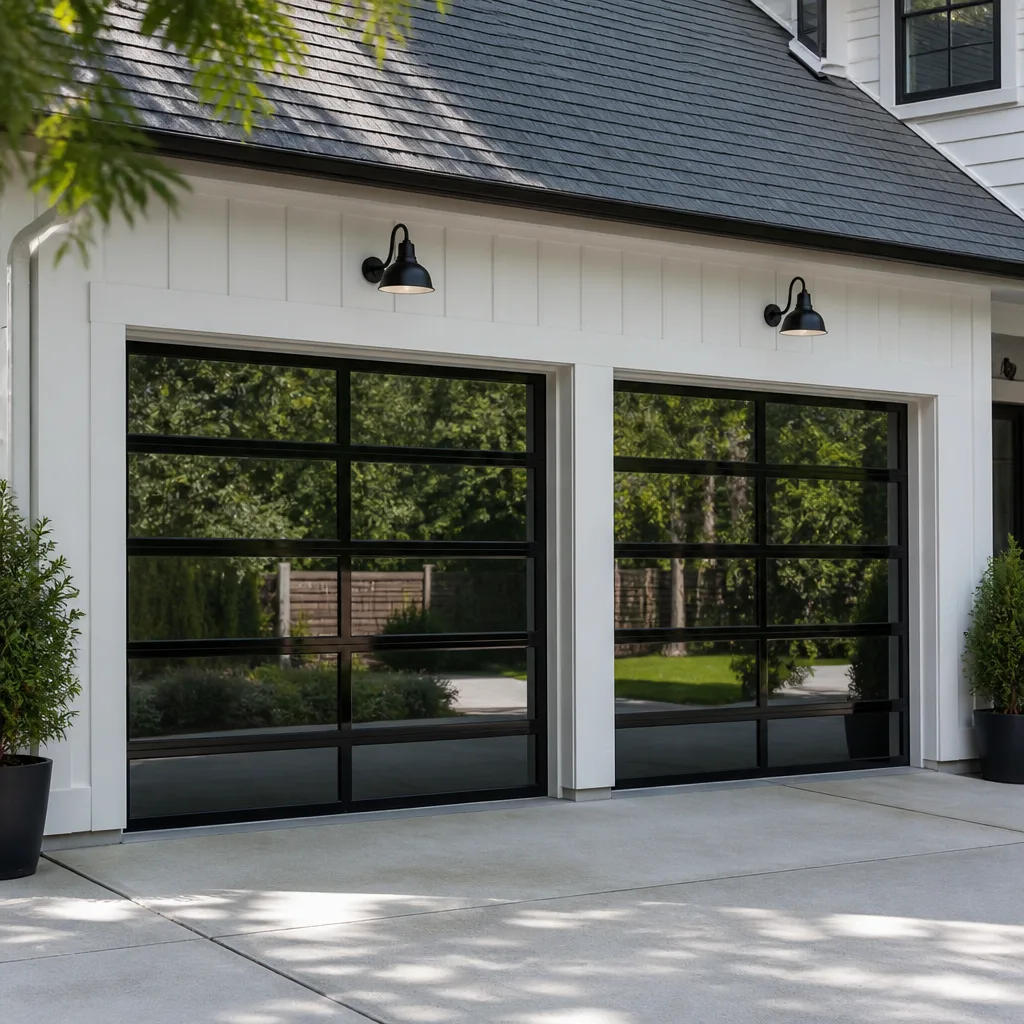 Full-view glass
 LiftMaster openers
 Chamberlain openers
Full 25-point door and opener safety check with every visit - springs, cables, rollers, tracks, and your LiftMaster or Chamberlain opener included
You get a price before we start. It does not change when the pro arrives.
Get your free estimateHow to Hire a Garage Door Contractor in Coral Springs: A Step-by-Step Guide
Most homeowners pick a garage door contractor the same way they pick a restaurant: they scan a few star ratings, pick the one that answers fastest, and hope for the best. That approach can cost you in Coral Springs more than it would almost anywhere else in the country. Broward County has real wind-load rules for garage doors, real permit requirements, and a contractor market that gets crowded with out-of-state operators after every storm season blows through. The vetting steps that protect you are not the ones most people think about. This guide covers how to check a Florida license, how to confirm permit history, what to ask about wind-load compliance, how to spot bait-and-switch on spring grades, and how to compare two quotes so they actually mean something. Read it before you sign anything in Coral Springs.
Quick Answer
To hire a garage door contractor in Coral Springs, verify the contractor’s Florida state license and their Broward County permit history first, then ask specifically about wind-load compliance and whether they pull permits. Compare at least two written quotes line by line, confirm the spring grade and hardware brand in writing, and get the labor warranty spelled out. A brand-agnostic contractor who repairs what you already own is usually your lowest-risk choice.
Styles & brands we work with
- Raised-panel steel
- Carriage house
- Modern flush
- Full-view glass
- LiftMaster openers
- Chamberlain openers
Table of Contents
- Why hiring right matters more in Coral Springs than most places
- Step 1: Verify the Florida state license
- Step 2: Check Broward County permit history
- Step 3: Ask the wind-load and Notice of Commencement questions
- Red flags specific to the South Florida contractor market
- How to compare two garage door quotes apples-to-apples
- Why brand-agnostic contractors often give more honest assessments
- The exact questions to ask before you book
Why Hiring Right Matters More in Coral Springs Than Most Places
Garage doors are not cosmetic in South Florida. They are part of the building envelope, and the building envelope has to hold through hurricane season. That means the rules that govern how a door is anchored, what its rated wind resistance is, and whether the installation was permitted are not paperwork formalities. They are the difference between a door that stays put in a storm and one that becomes a liability.
Coral Springs is a fully built-out city, which shapes the contractor market in a specific way. There’s almost no new construction to chase, so the work is replacement, repair and retrofit on homes that were built decades ago. Plenty of those doors are original equipment. That’s the situation most Coral Springs homeowners are in when they start looking for a contractor: an older door, an older opener, and no idea whether either is code-compliant today.
It also means the housing stock varies a lot by neighborhood. A door in a community near the Sawgrass Expressway may be a different vintage and a different spec than one in a neighborhood closer to University Drive. A contractor who knows Coral Springs will ask what section of the city you’re in and what year your home was built, because that changes what they expect to find when they open up the door and look at the springs, hinges and anchor points.
Add storm season on top of that. After a major weather event, contractors from outside Florida show up offering fast work at low prices. Some are legitimate. Many are not. The vetting steps below are specifically built to filter them out before they get a deposit.
Step 1: Verify the Florida State License (The Check Most Homeowners Skip)
Every legitimate garage door contractor operating in Florida should hold a state license that covers the work they’re doing. Garage door installation and repair typically falls under specialty or general contractor licensing depending on the scope, and the license number should be on their written estimate, their website, and any contract you sign. The check itself takes about five minutes and almost nobody does it.
Here’s how to verify it properly:
- Ask for the license number in writing before any site visit.
- Look the number up directly with the state licensing database, not through a link the contractor sends you.
- Confirm the name on the license matches the company name on the quote.
- Confirm the license type covers garage door installation and repair, not just general handyman work.
- Check the license status, not just the number. An expired or inactive license is a problem even if the number is real.
That third step catches more problems than any other. It’s common for a subcontractor arrangement, a franchise, or an out-of-state LLC to quote you under one name and hold a license under another. If the names don’t match, ask why before you proceed. A legitimate contractor will explain the structure without hesitation.
Insurance matters just as much. Ask for a certificate of insurance showing general liability and workers’ compensation coverage, and confirm the coverage is current. If a technician is injured on your property and the contractor doesn’t carry workers’ comp, that exposure can land on you as the homeowner. This is not the place to take someone’s word for it.
If you want the repair handled by a team that works on your existing system rather than one that only sells new doors, that’s worth confirming up front. We handle garage door repair across the brands most Coral Springs homes already have installed, which means the license conversation doesn’t come with a sales pitch attached.
Step 2: Check Broward County Permit History (The Other Check Most Homeowners Skip)
Permit history is the paper trail that tells you whether a contractor actually works to code, or just says they do. When a garage door is replaced or structurally modified in Broward County, the work typically requires a permit and an inspection. A contractor who routinely skips that step is telling you something about how they operate.
Check it this way:
- Ask the contractor for the permit number on their most recent comparable job in Broward County. A contractor with a real track record can provide one.
- Look up the permit yourself through the county or city building department records.
- Check whether the permit was closed out with a passed inspection, not just opened.
- Ask directly: “Will you pull the permit for my job, or is this a no-permit install?”
That last question separates contractors quickly. A contractor who immediately explains when a permit is and isn’t required, and offers to pull it when it is, is operating the way a professional should. A contractor who says permits are never needed for garage doors is either misinformed or hoping you won’t ask.
If you’re selling your home in Coral Springs in the next few years, permit history matters even more. Unpermitted work can surface during a buyer’s inspection and stall a closing. Getting the permit pulled correctly on the front end is cheaper than resolving it later, and it’s something you can verify before you write a check.
When you’re not sure whether your job triggers a permit, ask your city’s building department directly. They’ll tell you. The answer takes a phone call and it’s the authoritative one.
Step 3: Ask the Wind-Load and Notice of Commencement Questions
Wind-load compliance is the question most homeowners never think to ask. In South Florida, garage doors have a rated wind resistance, and the anchoring system, the reinforcement, and the door’s own engineering all factor into whether that rating holds up. When a door is replaced, the new door needs to meet the rating required for that location. A contractor who can’t explain wind-load ratings in plain language, or who waves the question off, isn’t the one you want doing the install.
Ask these in order:
- “What’s the required wind-load rating for a garage door at my address?”
- “What rating does the door you’re quoting carry, and how is it documented?”
- “How is the door anchored and reinforced to meet that rating?”
- “Will this installation require a Notice of Commencement?”
- “Who signs it, and what do I need to provide?”
A Notice of Commencement is a document that gets recorded for certain permitted improvements. It’s not complicated, but it does require the homeowner’s involvement, and a contractor who has done this many times in Broward County will walk you through it without drama. One who has never heard the term is a problem.
Wind-load compliance also affects your homeowner’s insurance. Carriers in Florida care about the building envelope, and an unpermitted or non-compliant door can complicate a claim or an inspection. Getting this right on the front end is the whole point of vetting a contractor, not just checking star ratings.
If your door is failing and you need it handled fast, we also cover garage door opener repair and emergency response when the door won’t open or close at all. But even on an urgent repair, ask the wind-load question. Speed and compliance are not a trade-off.
Red Flags Specific to the South Florida Contractor Market
Some contractor red flags are universal: no written estimate, no physical address, pressure to pay cash up front. South Florida has a few more that show up specifically here. Knowing them in advance is the best defense.
Out-of-state LLCs that appear after storms
When a major storm moves through, out-of-state contractors show up offering fast turnaround at low prices. Some are legitimate. Many disappear before the work is finished or before warranty issues surface. Check the license and insurance carefully, and ask for local references you can actually reach. If the company name changed recently or has no verifiable local presence, keep looking.
Bait-and-switch on spring grades
Springs are the most common failure point on a garage door, and they come in different grades and cycle ratings. A contractor quoting “springs included” without specifying the grade is leaving room to install a lower-grade spring than you paid for. Ask for the spring grade in writing on the estimate, and ask what cycle count it’s rated for. This is the single easiest place to get taken on price without noticing.
Pressure to replace rather than repair
A contractor whose business model is new door sales has a financial incentive to recommend replacement. Sometimes replacement is genuinely the right call. But if the recommendation arrives before anyone has looked at the springs, the opener, and the door’s structural condition, ask why. A repair-first contractor will tell you what can be fixed and what can’t, and give you the reasoning.
No written estimate
An estimate given verbally or by text message isn’t an estimate. Get every line item in writing, including labor, parts, and warranty terms. The written estimate is the price. If a contractor won’t put it in writing, that’s the whole answer.
No physical business presence
You should be able to find a verifiable business address and reach someone who stands behind the work. A website with a contact form and nothing else is not enough for a job that touches your home’s building envelope.
How to Compare Two Garage Door Quotes Apples-to-Apples
Two quotes for the same job can look identical on the total price and be completely different jobs. The line items that matter are the ones that determine what you actually get, and most homeowners compare the wrong ones. Here’s what to match up.
Line items that matter
- Spring grade and cycle rating. A standard-cycle spring and a high-cycle spring have different lifespans and different prices. Make sure both quotes specify the same grade.
- Hardware brand. Hinges, rollers, and brackets vary in quality. A quote that says “hardware included” without a brand is a quote you can’t compare.
- Labor warranty. How long does the contractor stand behind the labor if something fails? This is separate from the manufacturer’s parts warranty and often more valuable.
- Permit pulled or not. A quote that includes pulling the permit and passing inspection should cost more than one that skips it. Skipping it isn’t a discount.
- Door rating documentation. For a replacement, the quote should identify the wind-load rating and how it’s documented.
Filler line items that don’t tell you much
“Lubrication included,” “safety check included,” and “cleanup included” are fine, but every legitimate contractor does those. If one quote pads its line items with basics and another doesn’t, the totals aren’t comparable. Strip those out and look at the parts and labor that actually differentiate the two bids.
A simple comparison method
- Lay both written estimates side by side.
- On a separate sheet, list: spring grade, hardware brand, labor warranty term, permit status, door rating (if replacement).
- Fill in what each quote says for each item.
- Mark any item where one quote is silent. Silence is not a match.
- Ask the contractor to fill in the gap in writing before you decide.
If one quote has three blanks and the other has none, you already know which one is a fair comparison. The price is quoted and agreed before any work starts, so if the estimate is fuzzy, the job will be fuzzy too.
Why Brand-Agnostic Contractors Often Give More Honest Assessments
A brand-affiliated dealer sells one line of doors and openers. That’s not automatically bad, but it shapes the recommendation. If your existing door is a Wayne Dalton and the dealer sells something else, the conversation tends to drift toward replacement. If your opener is a Craftsman and the dealer is aligned with a different brand, repair can look less attractive than it should.
A brand-agnostic contractor works on whatever system is already on your home. We’re trained across LiftMaster, Chamberlain, Genie, Clopay, Amarr, Wayne Dalton, Craftsman and Raynor. That matters because the question “will they know my system?” is often the reason homeowners get talked into a new door they didn’t need. When the contractor works on your brand either way, there’s no financial reason to steer you away from a repair.
This shows up most clearly on springs and openers. A spring failure is one of the most common and one of the most dangerous garage door repairs. A brand-agnostic tech will quote the spring replacement based on what your door actually needs. A new-sale contractor has a reason to suggest the whole door. Neither is automatically wrong, but one of them starts from a different place.
For more on how we approach the most failure-prone component, see our garage door spring repair page. Springs are under high tension and should always be handled by a trained technician. That’s not a sales line; it’s a safety rule. Don’t attempt spring work yourself.
The Exact Questions to Ask Before You Book
Bring this list to the call. Write the answers down. A contractor who answers them cleanly and in writing is the one you want.
- What’s your Florida state license number, and what does the license cover?
- Can you send a certificate of insurance for general liability and workers’ comp?
- Will you pull a permit for this job, and what does the inspection process look like?
- What wind-load rating does my door need, and how is your product documented to meet it?
- Will this job require a Notice of Commencement?
- What spring grade and cycle rating are you quoting?
- What hardware brand is included?
- What’s the labor warranty term?
- Is the estimate in writing, and is the price locked once I sign?
- Who will actually be on site, and are they employed by you or subcontracted?
If the answers come back vague, ask again. A good contractor doesn’t mind being asked twice. A bad one gets impatient, and that’s useful information too.
Common Mistakes to Avoid
- Hiring on price alone. The lowest quote is often the quote that skipped the permit. In Coral Springs, the permit and inspection are the reason the installation holds up through storm season, and skipping them is not a discount.
- Not checking the license name against the quote name. A real license number under a different business name means you’re dealing with a different company than the one you think you hired. Ask before proceeding.
- Accepting “springs included” without a grade. The grade and cycle rating determine how long the repair lasts. Get both in writing or you can’t compare bids.
- Letting a replacement conversation start before anyone looks at the door. Springs, openers and panels are all repairable in most cases. Ask for a diagnosis, not just a recommendation.
- Hiring an unfamiliar contractor who appeared after a storm. Check the license, the insurance and the local references before you hand over a deposit. This is the single biggest risk window in South Florida.
- Not asking about the Notice of Commencement. If it’s required and nobody mentions it, your job may not be fully permitted. Ask up front.
- Taking a verbal estimate. The written estimate is the price. No writing, no agreement.
See the difference
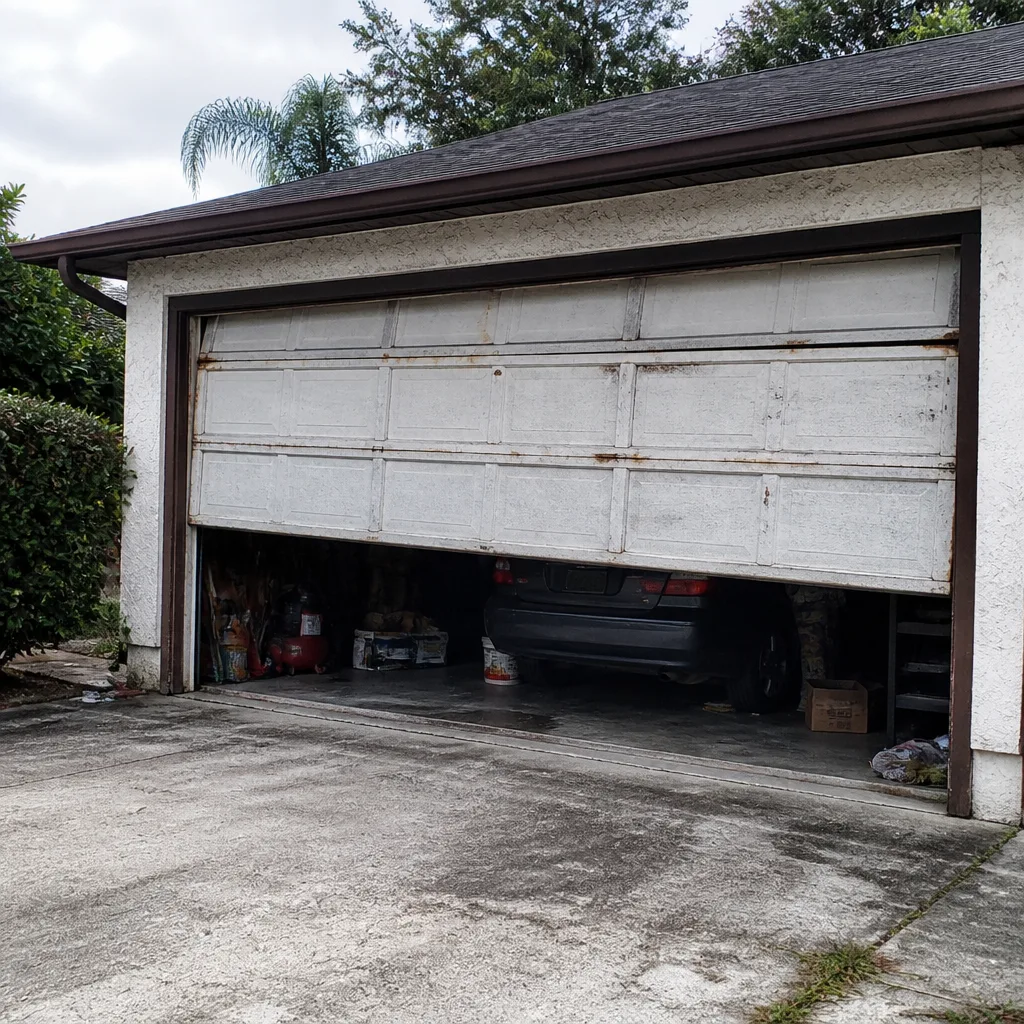 Before
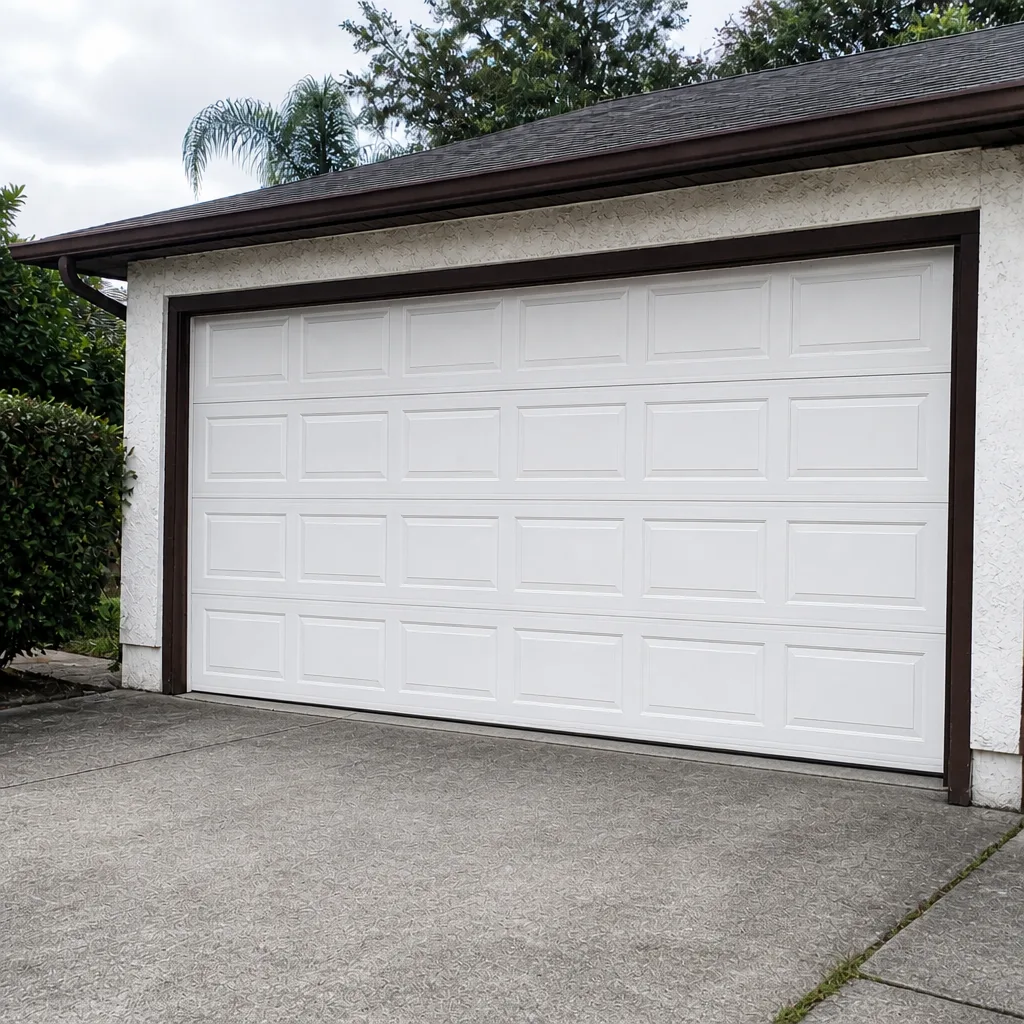 After
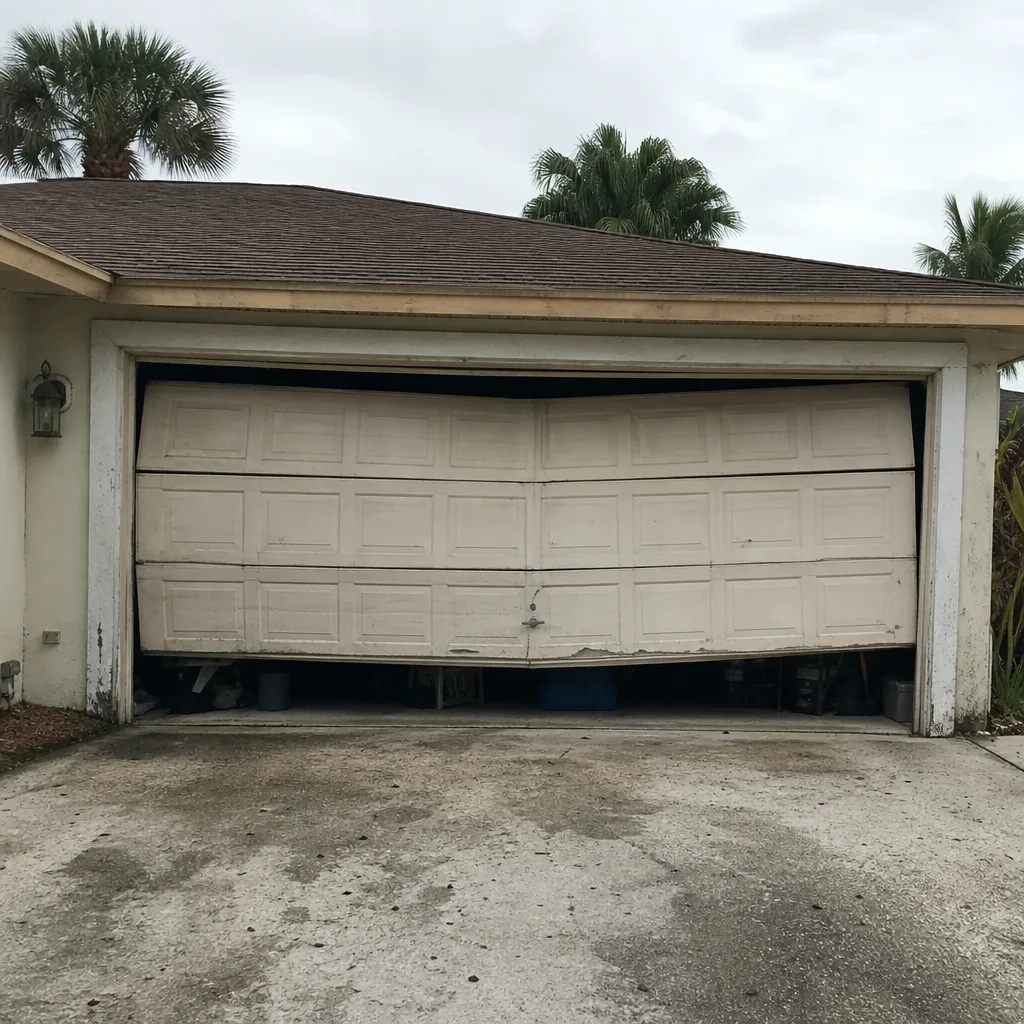 Before
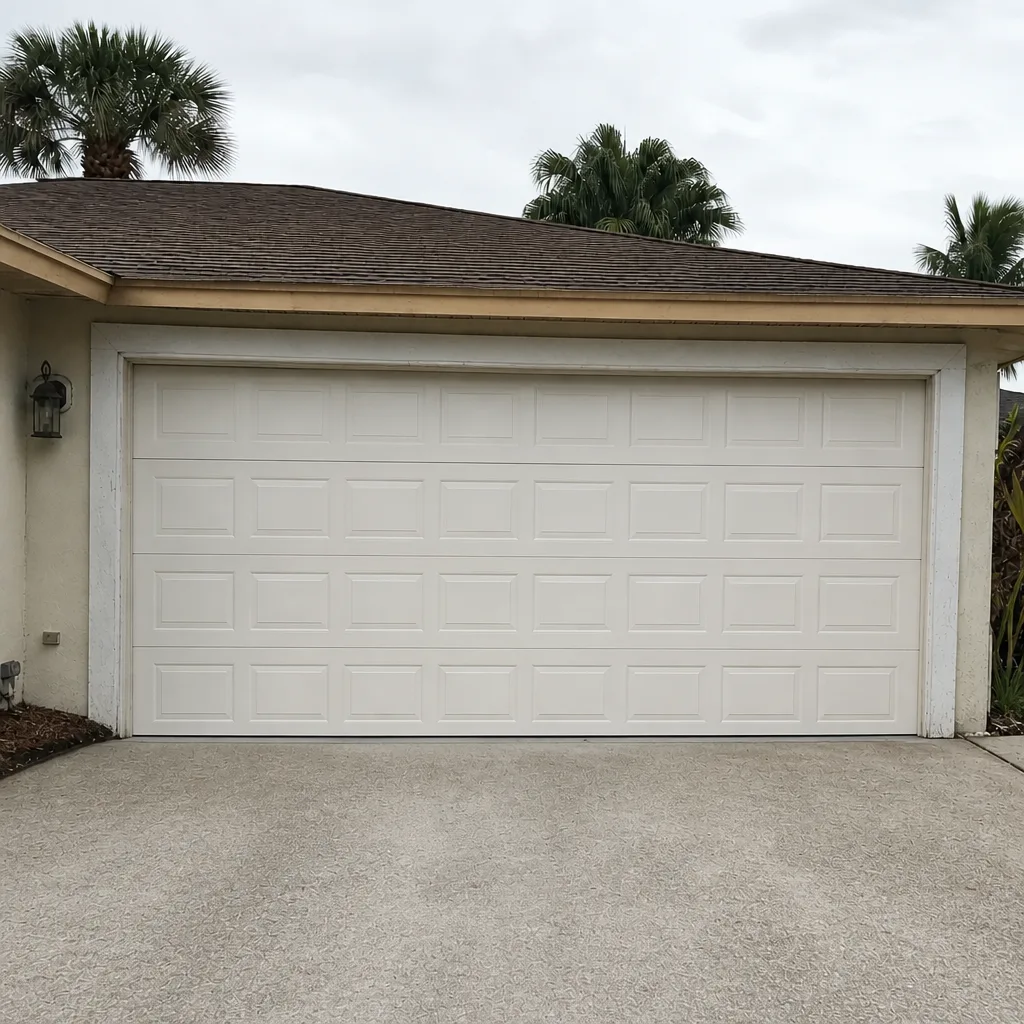 After
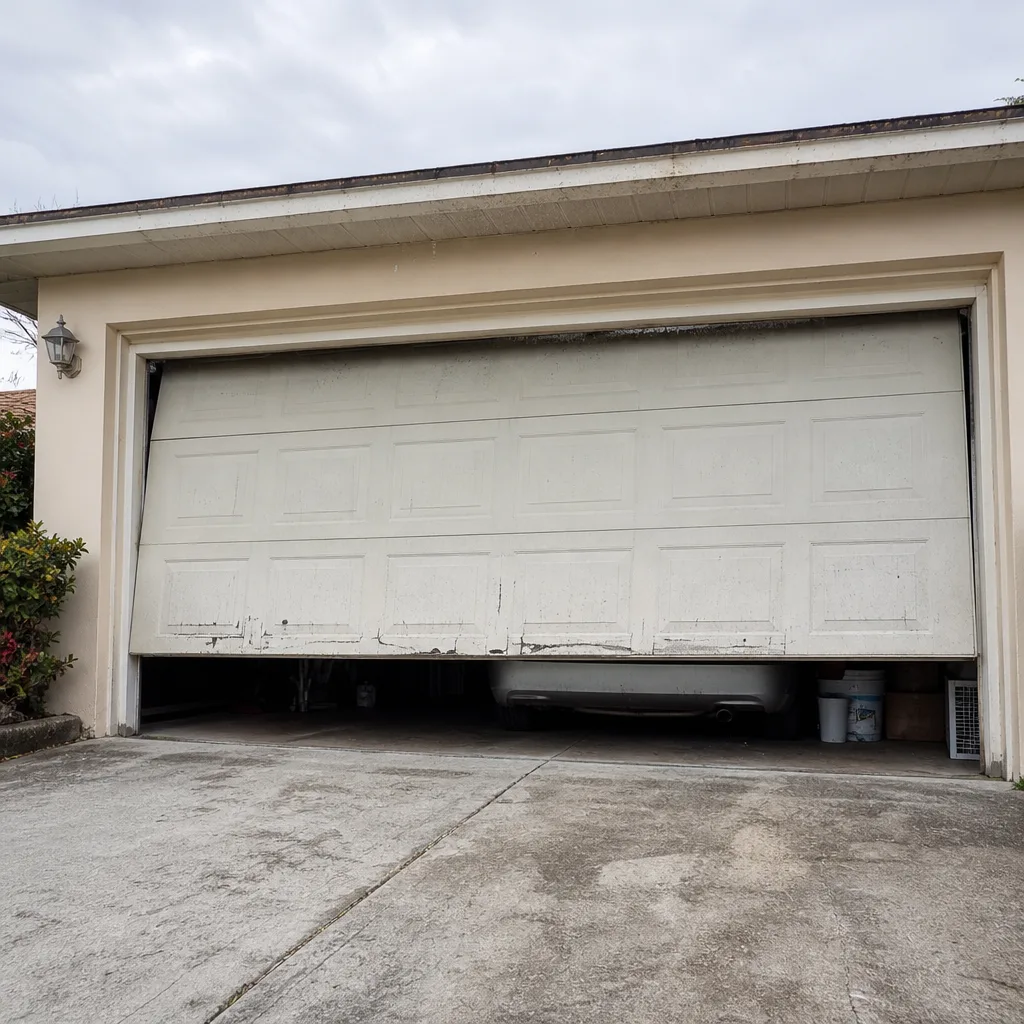 Before
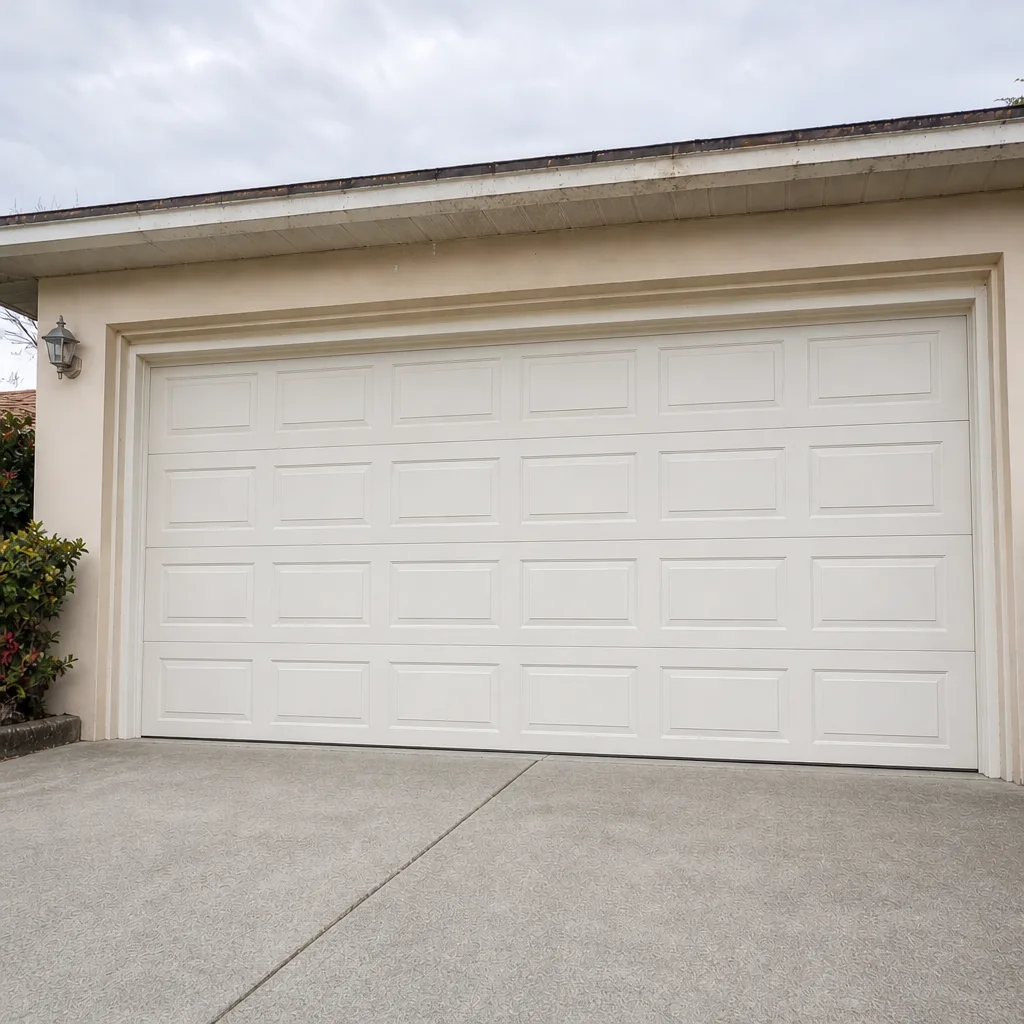 After
When to Call a Professional
Call a professional if your garage door won’t open or close, if the spring has visibly broken, if the opener runs but the door doesn’t move, if the door is off its track or hanging unevenly, or if the door binds and shudders on the way up. Springs and cables are under high tension and should never be handled by a homeowner. If your door is past the point of repair after a storm or an impact, or if you’re replacing an older door and need the wind-load rating documented correctly for Broward County, that’s also a call to make. Coral Springs Garage Door Repair Pros offers free estimates in Coral Springs. Call (855) 697-3734. We answer 24/7. Fast dispatch from 7am to 7pm, Sunday through Friday.
Frequently Asked Questions
In most cases yes. Broward County generally requires a permit for a garage door replacement or structural modification, followed by an inspection. Whether your specific job triggers it depends on the scope, so ask your city’s building department directly. A legitimate contractor will know the answer and will offer to pull the permit as part of the quote.
Ask for the license number in writing, then look it up directly with the state licensing database rather than through a link the contractor sends. Confirm the license is active, that the type covers garage door work, and that the name on the license matches the name on your quote. If those don’t match, ask why before you proceed.
It can. Florida carriers care about the building envelope, and an unpermitted or non-compliant garage door can complicate a claim or an inspection. Ask your contractor what wind-load rating your door requires, how the product meets that rating, and get the documentation in writing. Your insurance carrier can also tell you what they require for coverage on your specific home.
Repair is almost always cheaper than replacement when the door is structurally sound. Spring replacement, opener repair, panel repair and hardware fixes are all within reach for a competent contractor. Replacement becomes the right answer when the door’s structural integrity has failed, when parts are no longer available, or when the existing door can’t meet current wind-load requirements. Get a diagnosis first, then decide.
A Notice of Commencement is a recorded document associated with certain permitted improvements in Florida. Whether your job requires one depends on the permit scope, so ask your contractor and your city’s building department directly. A contractor with local experience will walk you through it, including what you need to sign and provide.
For repair and emergency calls, yes, same-day service is often available. We answer 24/7 and dispatch fast from 7am to 7pm, Sunday through Friday. For new door installation, the job is measured, ordered and scheduled, so same-day installation isn’t the timeline. Either way, the price is quoted and agreed before any work starts. Call (855) 697-3734. Estimates are free.
The Bottom Line
Hiring a garage door contractor in Coral Springs isn’t about finding the best star rating. It’s about verifying two things most homeowners never check: the Florida state license and the Broward County permit history. Do those, ask the wind-load and Notice of Commencement questions, compare quotes line by line on spring grade, hardware brand and labor warranty, and watch for the South Florida red flags: out-of-state LLCs after a storm, bait-and-switch on springs, and pressure to replace before anyone diagnoses the actual problem. A brand-agnostic contractor who repairs what you already own is usually the safest call. Get it in writing, confirm the estimate before work starts, and you’ll be ahead of most homeowners in Coral Springs.
Ready to get a written estimate? Coral Springs Garage Door Repair Pros is a specialist Coral Springs Garage Door Repair Pros team focused only on residential garage doors. We work on your brand, from LiftMaster and Chamberlain to Clopay and Amarr, and we’ll tell you honestly whether the fix is a repair or a replacement. Call (855) 697-3734. We answer 24/7. Fast dispatch from 7am to 7pm, Sunday through Friday. Estimates are free.
Written by the team at Coral Springs Garage Door Repair Pros.