
Last updated November 22, 2026
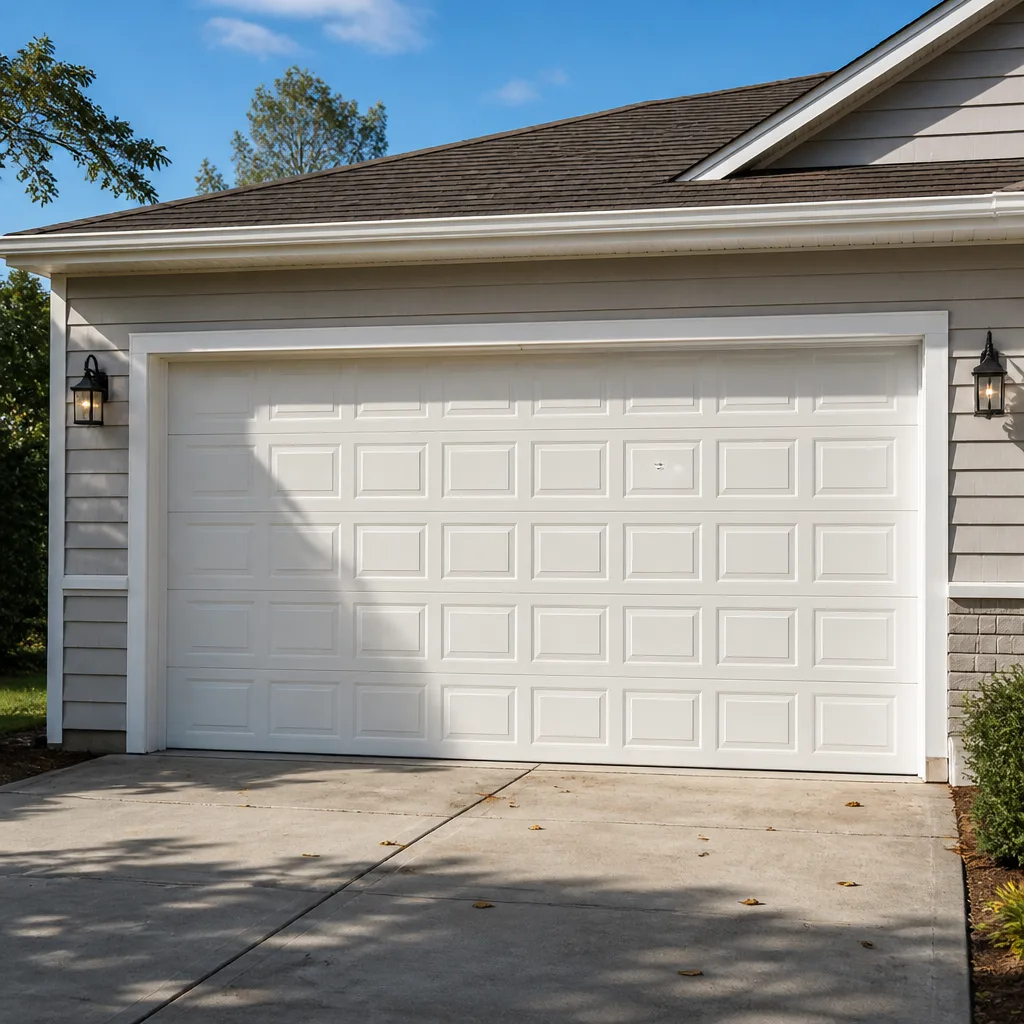 Raised-panel steel
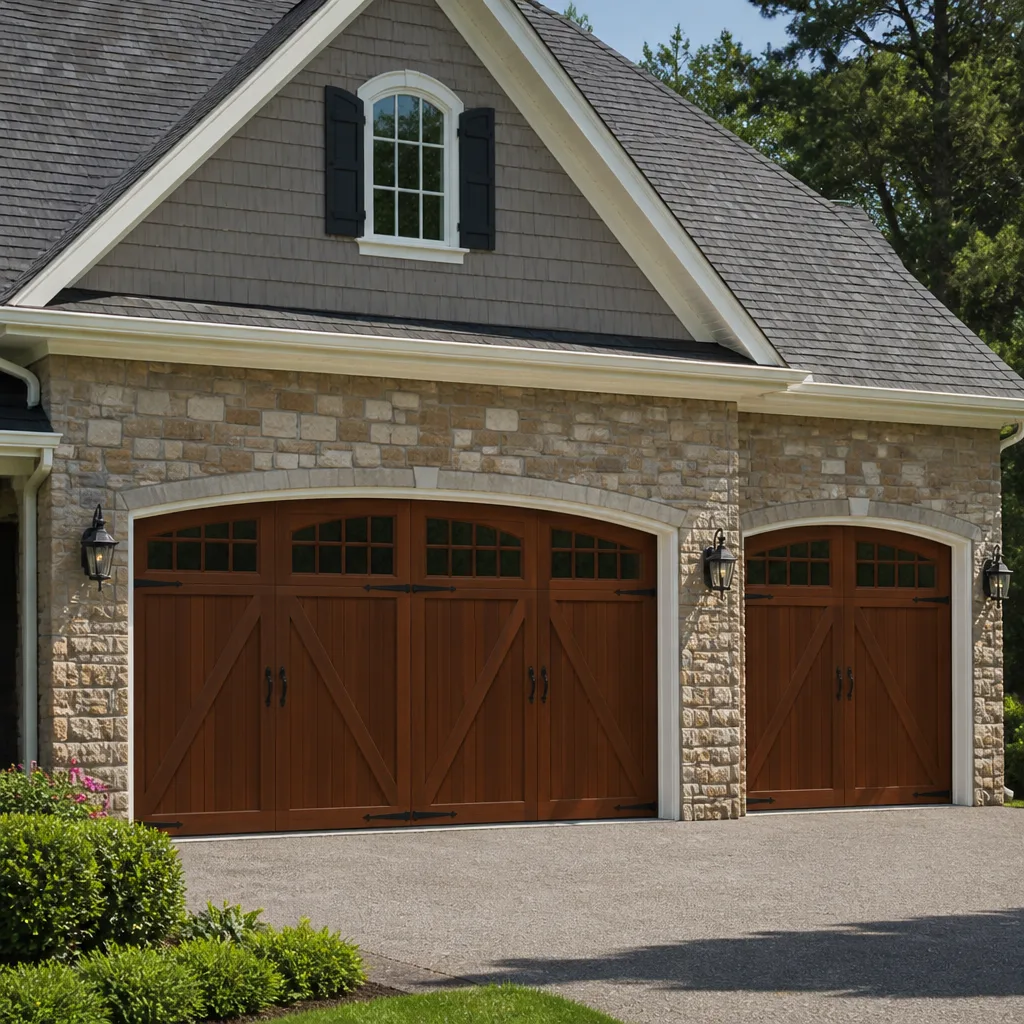 Carriage house
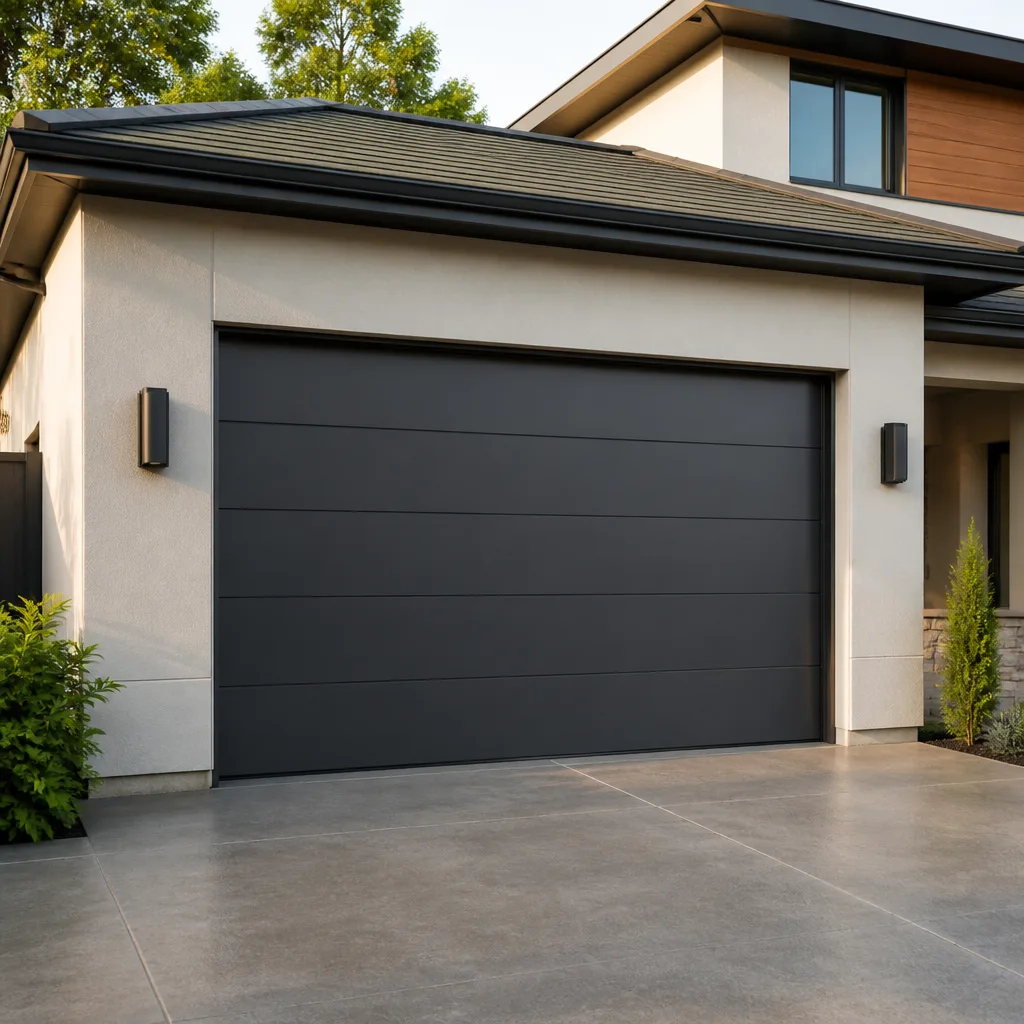 Modern flush
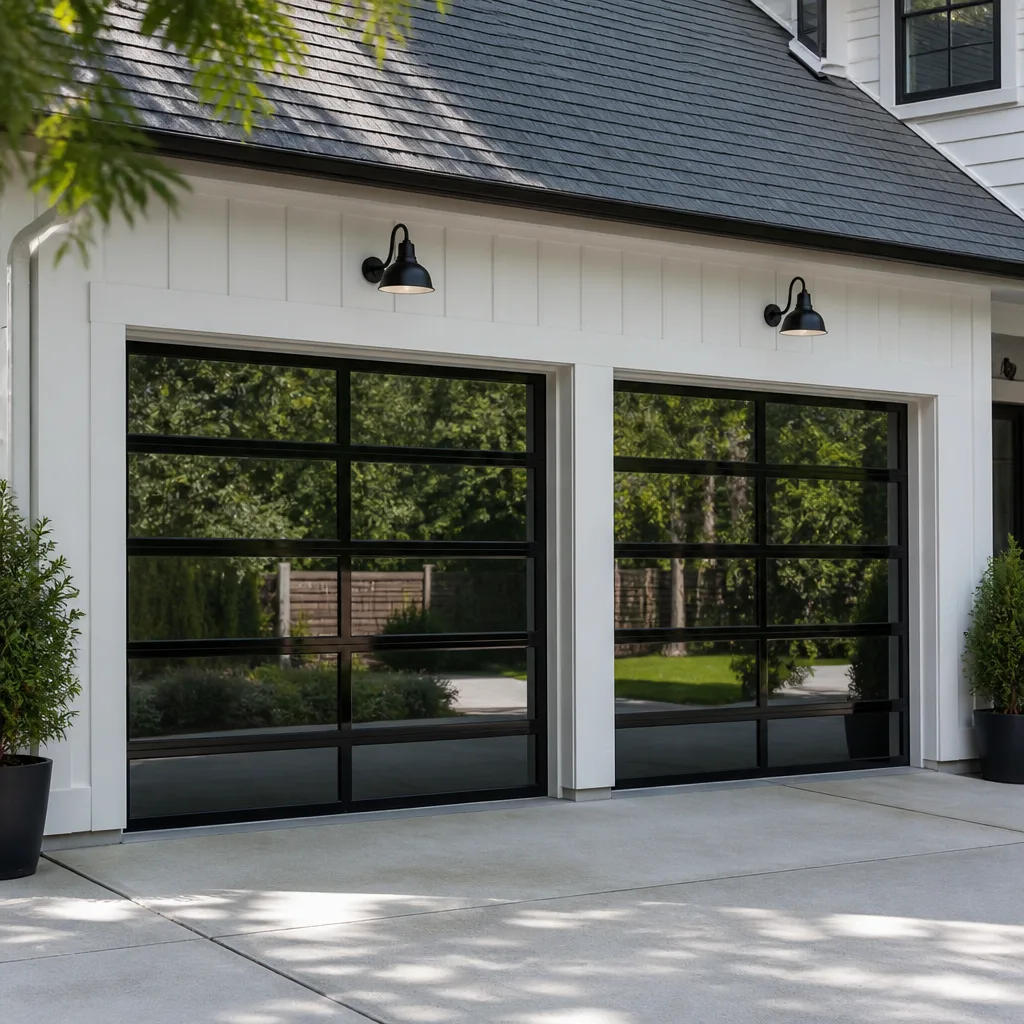 Full-view glass
 LiftMaster openers
 Chamberlain openers
Full 25-point door and opener safety check with every visit - springs, cables, rollers, tracks, and your LiftMaster or Chamberlain opener included
You get a price before we start. It does not change when the pro arrives.
Get your free estimateGarage Door Warning Signs: A Coral Springs Homeowner’s Reference Guide
Most homeowners call us about the noise. A grinding opener, a door that jerks halfway up, a slam at the end of the cycle. And those matter. But in our experience across Coral Springs, the warning signs that cost people the most money are the quiet ones: a faint rust streak on a spring, a door that drifts a little out of line, a weatherstrip that’s just starting to gap. These are the signals a garage door gives you months before it fails. This guide teaches you to read them, so you can decide what’s urgent and what can wait for a scheduled visit.
Quick Answer
The warning signs that most reliably predict a garage door failure in Coral Springs are rust streaks on springs or cables, uneven travel, a door that hesitates on the way up, and opener behavior that changes over weeks. A door that shudders on the way down, wobbles side to side, or won’t reverse is an urgent same-day problem. A faint wear pattern or a slow remote is usually a few-weeks problem. The difference between the two is what this guide is about.
Styles & brands we work with
- Raised-panel steel
- Carriage house
- Modern flush
- Full-view glass
- LiftMaster openers
- Chamberlain openers
Table of Contents
- The Quiet Warning Signs That Matter Most
- Reading Rust on Springs and Cables
- What Operational Signs Actually Mean
- Using Your Opener as a Diagnostic Tool
- Urgent vs. Schedule-Soon: An Honest Triage
- The One Sign Homeowners Ignore: Balance Drift
- Weatherstrip and Seal Warning Signs
- Common Mistakes to Avoid
The Quiet Warning Signs That Matter Most
A garage door doesn’t fail without telling you. It tells you slowly, in small changes over weeks or months. Someone who sees the door every day gets used to those changes, and the change becomes “how the door has always been.” That’s the trap.
The quiet signs fall into four groups: what you see on the hardware, what you hear during the cycle, how the door moves, and how the opener behaves. Here’s what each group is telling you.
- Visual: rust spots on springs or cables, wear on rollers, fraying on cables, gaps at the weatherstrip, dents that weren’t there last season.
- Audible: new grinding, squealing, popping, or a single loud click at the start of travel.
- Movement: hesitation, uneven travel, a lag on one side, shuddering at the bottom.
- Opener: slow response, intermittent operation, motor running without the door moving, reversing before it should.
In Coral Springs, the humidity is what pushes visual signs forward first. Metal parts that stay warm and damp, and that carry surface moisture through the summer, will show oxidation long before you’d notice a mechanical change. If your door has been on the same springs for years, and the finish has gone from clean silver to a dull, brown-flecked surface, that’s information worth acting on. The door might still lift cleanly. That doesn’t mean the spring is healthy. It means the spring hasn’t failed yet.
If you’re not sure which category a sign falls into, our team at Coral Springs Garage Door Repair Pros can walk through it with you over the phone, and we can come out for a free estimate if it warrants a look. Repair when possible, replace only when necessary is how we approach every call.
Reading Rust on Springs and Cables
Not all rust is a warning sign. Some is cosmetic surface oxidation. The key is telling the difference and understanding that even cosmetic rust becomes a real problem on a spring.
What surface oxidation looks like
A light, dusty film across the coil, no pitting, no brown staining on the surrounding housing, and no consistent pattern. That’s the finish reacting to moisture. It’s common in Coral Springs, where afternoon humidity and rain sit on exposed metal. It’s not an emergency, but it isn’t nothing either. It’s a reminder that the spring is exposed to conditions that accelerate wear.
What indicates a spring near failure
- Streaks between the coils: brown or orange lines running down the length of the spring, not just spots on the surface.
- Pitting or flaking: the finish has failed and the metal underneath is discolored or peeling.
- Cable rust at the drums: discoloration right where the cable winds around the drum on either side of the door.
- Consistent rust on both springs: a matched pair that’s rusting the same way is showing the same amount of wear and will fail at about the same time.
A garage door spring is under heavy tension even when the door is closed. That tension is what lifts the full weight of the door safely. When a spring is weakened by rust pitting, it still lifts the door right up until the day it doesn’t. That’s the trap with springs: they fail without warning at the point of failure, but they were giving you warning signs for months beforehand. This is why spring inspection should be part of any routine door check, and why we treat garage door spring repair as one of our core services.
Cables deserve a mention too. A cable that’s frayed or rusted at the drum can snap under the spring’s tension. We’ll say it plainly: this is not a homeowner repair. The parts are under high tension, and if they let go while you’re near them or holding them, the result can be serious injury. Our technicians have up to 15 years of experience with these systems, and that experience exists largely because the task requires the right tools, the right bracing, and training. If you see rust patterns that run down the coils or frayed spots on the cables, call us. We can inspect it and give you a written price before any work begins.
What Operational Signs Actually Mean
“It hesitates on the way up” is the phrase we hear most. It’s a useful description but it sounds vague. Here’s what it translates to mechanically, and why the direction the door struggles in tells you so much.
Hesitation on the way up
When the door hesitates going up, it means the opener is lifting the full weight of the door, or close to it, and the springs are doing less of the work than they should be. Springs are designed to offset most of the door’s weight, leaving the opener to overcome inertia and friction, not the whole load. If the spring is weak, tired, or has a small crack in the coil, the opener feels the weight and hesitates on the first pull. In our experience, hesitation on the way up that gradually gets worse over a few weeks is almost always a spring that’s losing tension.
Shuddering on the way down
A door that shudders going down is a different problem. Going down, the springs are absorbing weight, not resisting it. If the door shudders on descent, look at the track, the rollers, and the balance. Track bent out of alignment, rollers that have flat-spotted or worn past their diameter, or a hinge that’s come loose from the panel can all cause the door to shuttle back and forth on the way down. This is often the sign of a door that jumped a roller or took a light hit. It’s also a sign that’s likely to get worse: a shudder flexes the panels, and flexing panels eventually crack at the hinge lines.
Uneven travel left to right
A door that lifts with one side lagging the other is a balance-and-tension problem. The springs or cables on one side are doing more work than the other. Left alone, the door binds in the track, the opener works harder, and the door can eventually come off the hinges or jam in the opening. This one usually resolves with a proper spring and cable adjustment, but it involves high-tension hardware. A same-day call is appropriate here.
Using Your Opener as a Diagnostic Tool
The opener is the most talkative part of the system. It’s not just a motor, it’s the part that tells you what’s happening with the door before your eyes notice it. Learning to read opener behavior is one of the fastest ways to catch problems early.
What each behavior indicates
- Slow response when you press the remote: the remote battery is dying, the antenna wire inside the opener cover is compromised, or the logic board is glitching. Start with the battery. If the opener is 10 or more years old and you see other symptoms too, the board is the likely culprit.
- Intermittent operation: the door works, then doesn’t, then works again. This points at the opener’s safety sensors, the wiring that runs down to them, or a loose connection at the motor head. In Coral Springs, sensors can drift out of alignment when the sun angle shifts or after a heavy rain if the sensor’s bracket isn’t tight. Sensors must also be clear of obstruction to work.
- Motor runs but door doesn’t move: the opener’s drive is engaging but the door isn’t coming along. Could be a snapped spring (the door is too heavy for the opener to lift), a stripped drive gear inside the opener, or the door disconnected from the trolley via the release cord. If the motor spins and the door doesn’t, don’t keep pressing the button. Call us. Running a motor against a dead spring can damage the opener.
- Door reverses before it should: the opener’s force limit is set too tight, the safety sensors are misaligned, or something in the track is binding. This is a same-day call. A door that reverses unpredictably can close on a person or object.
- Opener forces the door down hard: the force setting has been turned up or has drifted, and the safety reverse is compromised. Same-day call.
We often see Coral Springs homeowners cycle their opers a dozen times trying to “make it work” before calling. Don’t. Repeatedly forcing a door that’s telling you it’s in trouble can turn a repair into a replacement. If you’re ready for a proper look, our garage door opener repair team can inspect it. Our technicians work across LiftMaster, Chamberlain, Genie, Clopay, Amarr, Wayne Dalton, Craftsman, and Raynor systems, so the brand on your opener isn’t a barrier to getting help.
Urgent vs. Schedule-Soon: An Honest Triage
Not every warning sign is a same-day emergency. Some signals give you weeks to schedule a service. Others give you hours or days before the door fails in a dangerous way. Here’s how we sort them, and we’ll give you the same sort whether you call us or a different contractor.
Same-day problems (call now)
- A snapped spring. The door may be stuck up or stuck down, and the opener is not rated to lift a door without spring support.
- A frayed or snapped cable.
- Door off the track or one side hanging.
- Opener runs but won’t move the door.
- Door reverses unpredictably when it should close.
- The safety reverse no longer triggers on contact.
- Door won’t stay shut or closes on its own.
Schedule-soon problems (a call within a few weeks)
- Persistent squeal or grind during travel.
- Visible rust patterns on springs but the door still lifts cleanly. Get this one inspected – it’s not cosmetic when it’s on the coil.
- Shudder on the way down that comes and goes.
- Intermittent opener behavior.
- Slow remote response.
- Visible gaps at the weatherstrip.
- A door that’s drifted out of balance (see the next section).
Our honest read: the urgent list is worth a call right now even if it’s inconvenient. The schedule-soon list is worth a call within a couple of weeks, before it graduates to the urgent list at an awkward time. We answer 24/7. Fast dispatch from 7am to 7pm, Sunday through Friday. If a call comes outside dispatch hours, it’s booked into the next opening, which is better than a surprise.
The One Sign Homeowners Ignore: Balance Drift
If there’s one warning sign we wish Coral Springs homeowners checked monthly, it’s door balance drift. It’s the sign that almost everyone ignores until a spring snaps, and it’s the one that gives you the most lead time.
What balance drift is
If you’ve noticed that your door used to lift with a soft push and now takes a real shove, your balance has drifted. That’s the springs gradually losing tension. It happens slowly, which is why most people don’t notice. A door that’s been one way for years suddenly takes more effort not because of a single event, but because the springs have given up a bit of their charge with every cycle.
The 60-second balance test
- Close the door fully. If the opener is connected, pull the release cord (usually a red handle hanging from the trolley) to disconnect the door from the motor. The door should now be fully manual.
- Lift the door by hand to about halfway up (roughly chest height) and stop.
- Let go. A balanced door stays where you left it, or drifts very slightly. An unbalanced door slides down on its own, sometimes fast.
- Push it gently a couple of inches up and back down. The effort should feel light. If the door feels heavy while you’re moving it, the springs are under-performing.
- Reconnect the door by pulling the cord and running the opener once so the trolley engages. Open and close the door once to confirm the connection.
Safety note: do this with the door on its full track, standing clear of the door’s path, no children or pets in the area, and never with the springs exposed or while looking directly into the spring assembly. Do not adjust any springs yourself. Balance drift is the sign that a professional inspection is due. It’s a 60-second check that can save you a failed spring at the wrong time, and it’s the same test our technicians run when a driver mentions a door that “feels heavier than it used to.”
If the balance has clearly drifted, call us. Rebalancing a door involves spring tension and cable adjustments, and it isn’t safe to do without proper bracing and training. We’ll test the door, give you a written price for what it needs, and get the balance back where it should be. If something else has been going on too, our garage door repair team can handle the full look in one visit.
Weatherstrip and Seal Warning Signs
South Florida’s rain pattern is a useful garage door diagnostic tool. Coral Springs gets heavy afternoon storms through the summer, and a door that seals cleanly in the dry season will show you exactly where it’s leaking once the rain starts. A gapped weatherstrip isn’t just a comfort issue. It lets water reach the bottom of the door, the bottom seal, the track, and eventually the springs and cables.
What to look for on the seal
- Light through the gap: stand inside the garage with the door closed on a sunny day. Any line of light along the bottom means the weatherstrip has flattened.
- Water on the floor after rain: a thin trail under the door, or water pooling at one corner. A little water at one corner is a strong sign the door is slightly out of level or the threshold strip is worn.
- Cracked or brittle bottom weatherstrip: the rubber has hardened and no longer springs back when the door comes down.
- Visible daylight around the side jambs: worn side weatherstrip, common on older doors.
- Pest activity near the corners: insects and small animals find the gap first.
Weatherstrip replacement is often a small job. It’s also a useful time to have the door looked over, because the door that couldn’t seal was often the door with a small balance problem, and balance problems have a way of graduating to spring problems. Catching the gap early is one of the cheapest forms of garage door maintenance, and it’s a good first step if you’re not sure whether your door needs more than weatherstripping.
If you’re beyond weatherstripping and the door itself has warped or aged out of the frame, that’s a different conversation. We work on Clopay, Amarr, and Wayne Dalton doors frequently, and we can talk you through whether a repair or a new door is the honest answer. Repair when possible. Replace only when necessary.
Common Mistakes to Avoid
- Ignoring a quiet sign because the door still works. A door that’s been lifting cleanly with rust streaks on the springs has been warning you for months. “It works” isn’t the same as “it’s healthy.”
- Turning up the opener force to push through a problem. If the door is hesitating, something is wrong with the door or springs. Raising the force setting pushes the motor harder and stresses the system. It doesn’t fix anything.
- Cycling a stuck door repeatedly. If a door won’t open or close, pressing the button a dozen times can damage the opener, stretch a frayed cable, or force a door off the track. One or two tries, then call.
- Assuming a routine tune-up will catch everything. A tune-up helps, but it’s not the same as a proper inspection. When you have the door serviced, ask the technician to check balance drift, spring rust patterns, and cable condition specifically.
- Replacing an opener when the door is the problem. Motor running but the door not moving is often a spring, cable, or trolley issue, not a dead opener. It’s a common Coral Springs call – someone has called an electrician for the “dead opener” when the real problem is mechanical. Get the door and the opener looked at together.
- Treating weatherstrip gaps as comfort only. A gap lets water reach the bottom of the door and the edge of the track. Left for a summer in Coral Springs, that water path leads to rust where it matters.
- Doing spring or cable work yourself. Springs and cables are under high tension even on a closed door. Replacing or adjusting them without the right bracing and tools can cause serious injury. This is not a handyman job.
See the difference
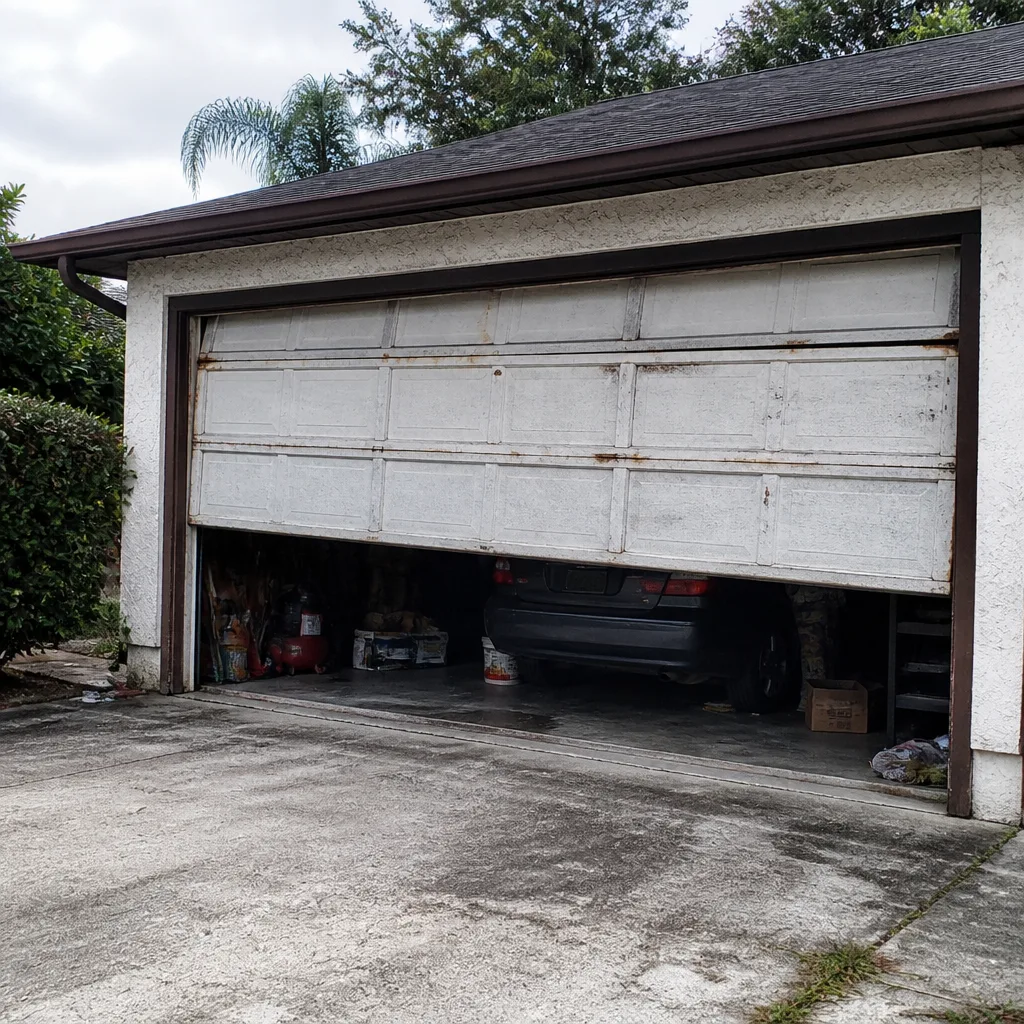 Before
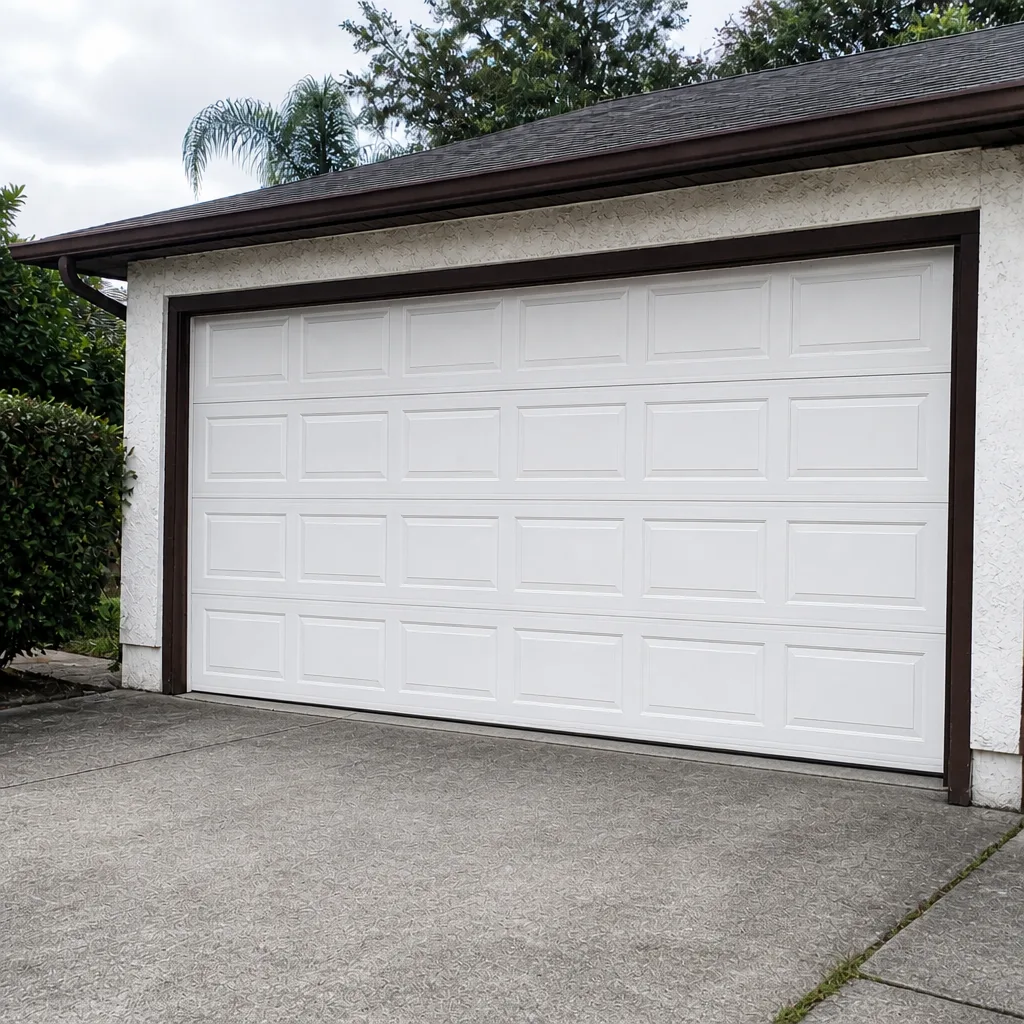 After
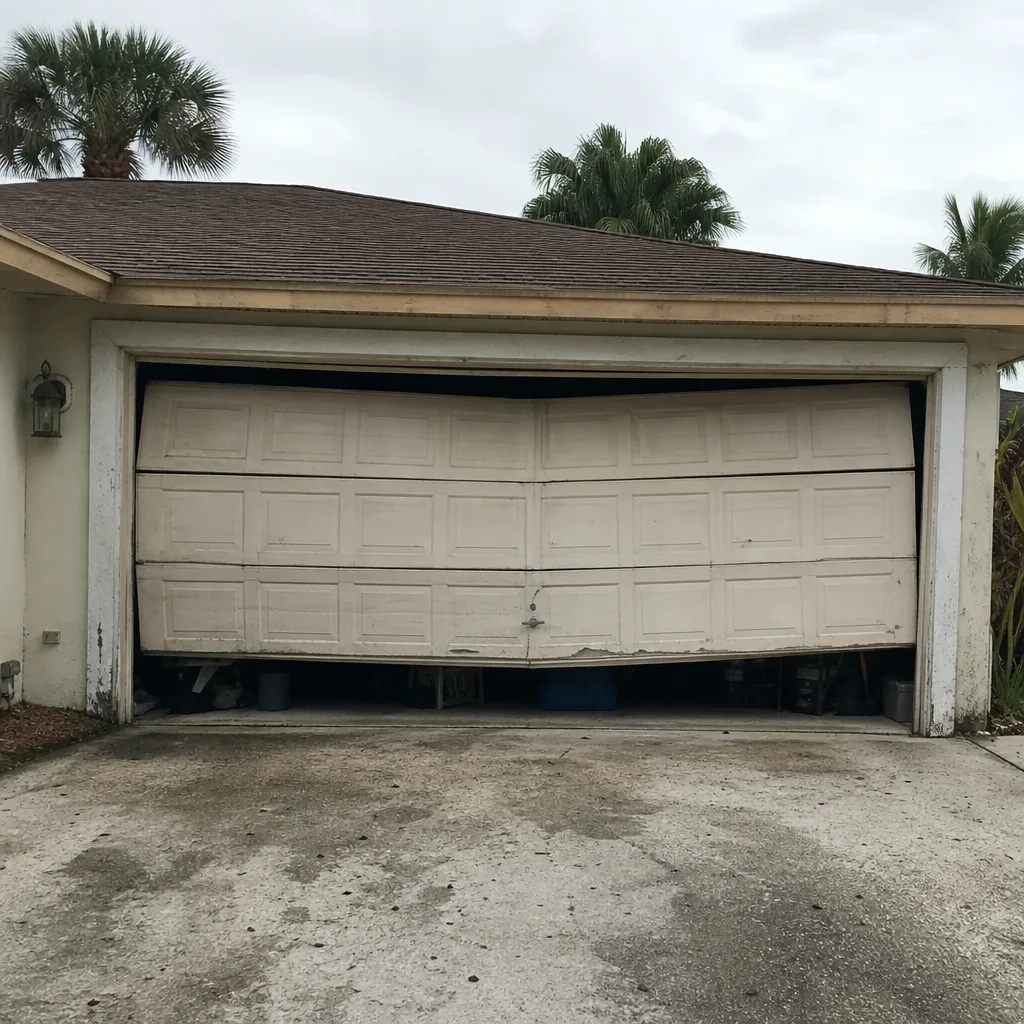 Before
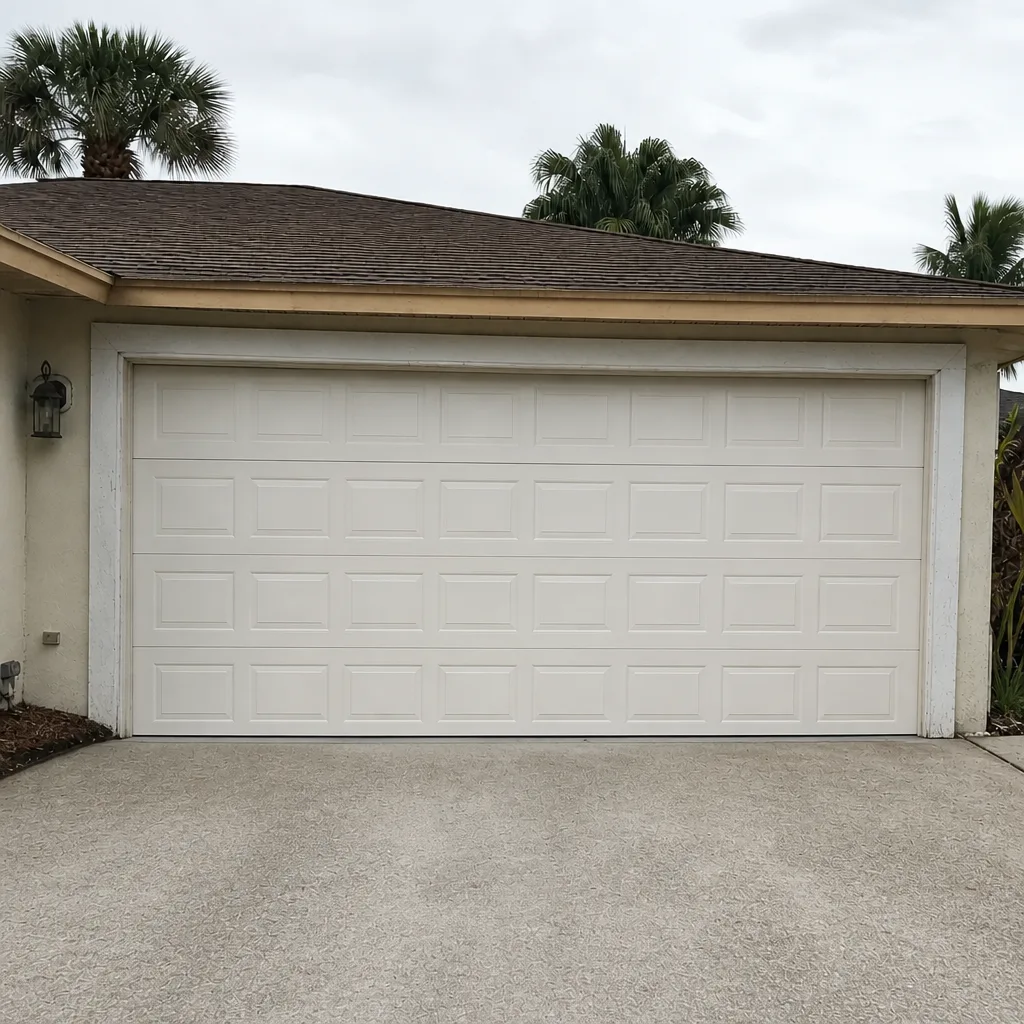 After
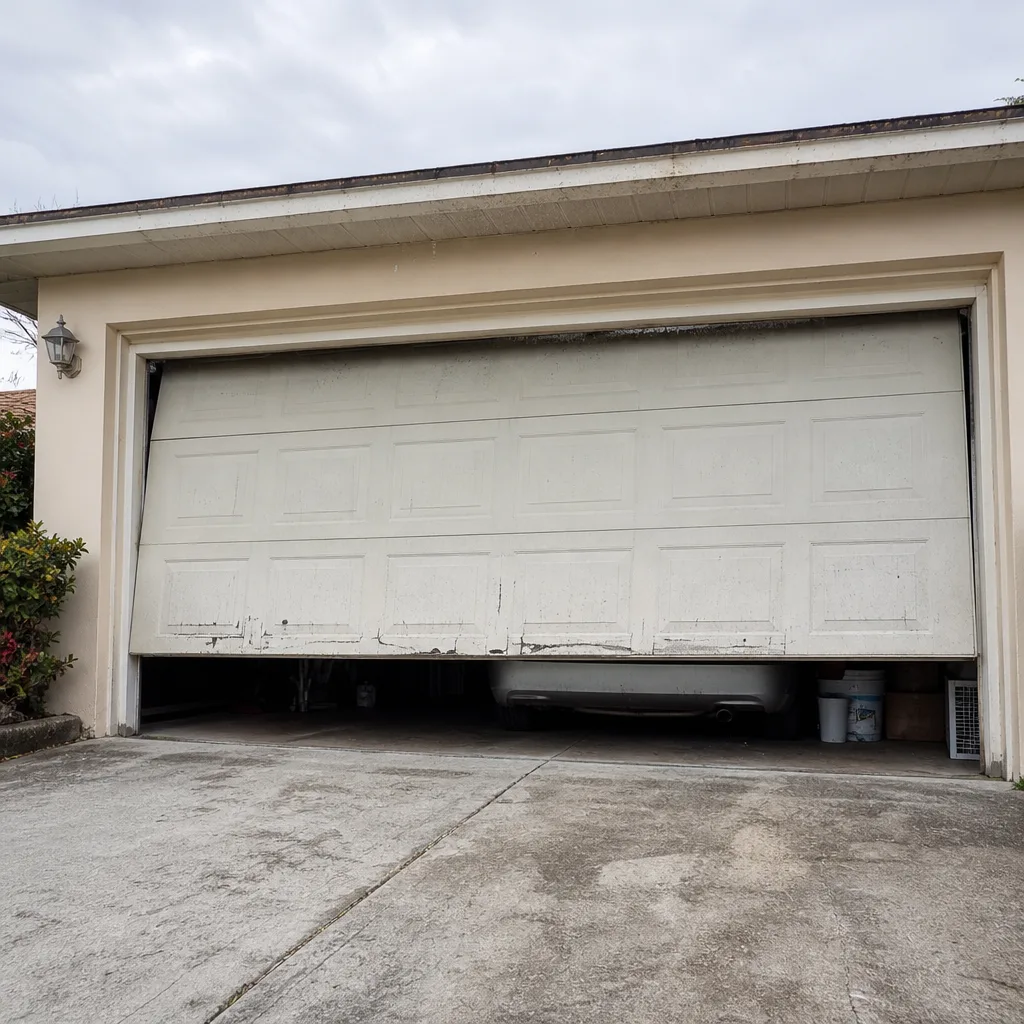 Before
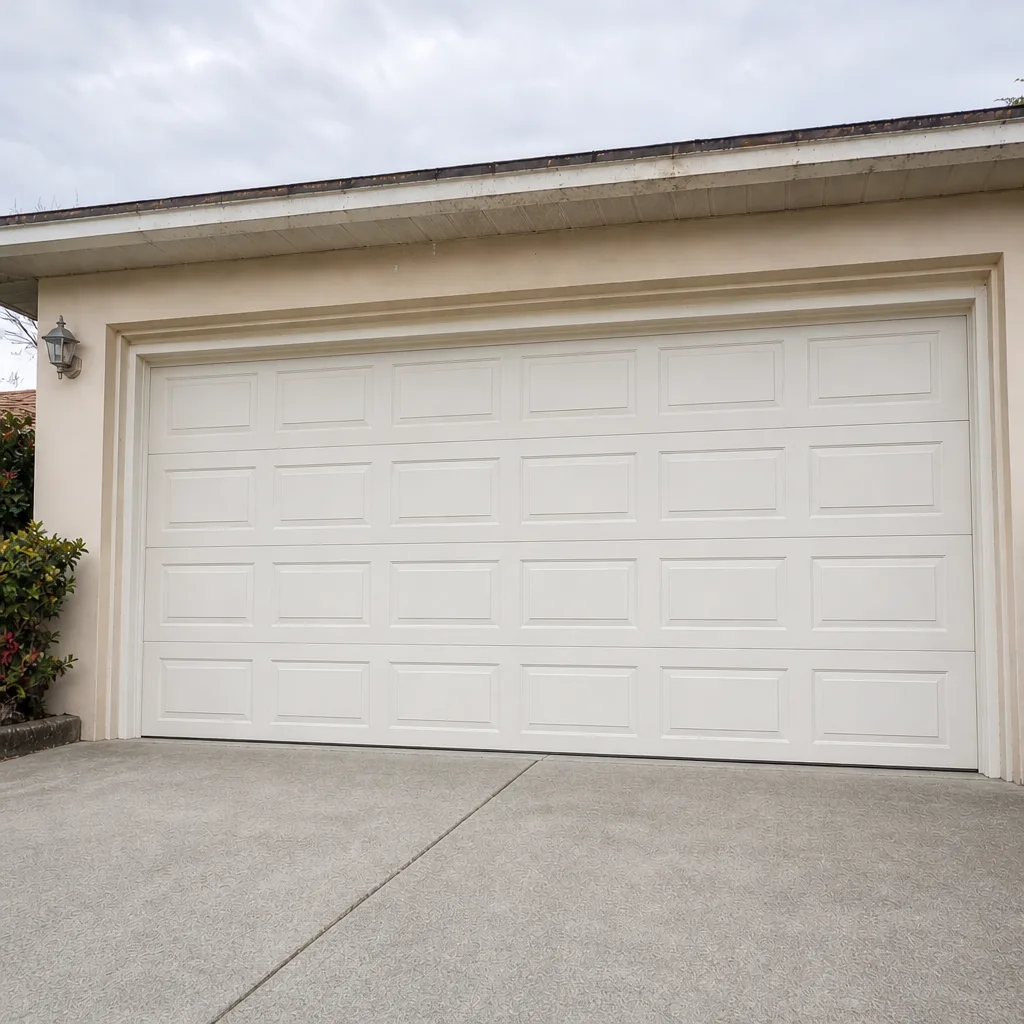 After
When to Call a Professional
Call us for any of these. A door that hesitates or strains on the way up. A door that shudders, wobbles side to side, or that jumps out of the track. A door that won’t reverse when it meets an object, or reverses unpredictably. Rust streaks running down the spring coils, or frayed cables. Visible daylight at the bottom weatherstrip. A failed balance test, or a door that suddenly feels heavy. Anything involving the springs or cables directly. An opener that runs but doesn’t move the door, or door control panels that don’t respond. Coral Springs Garage Door Repair Pros offers free estimates in Coral Springs, and our technicians handle the full scope: springs, openers, door panels, and full door replacement when a repair won’t hold. Call (855) 697-3734. We answer 24/7. Fast dispatch from 7am to 7pm, Sunday through Friday. We confirm the price with you in writing before any work begins.
Frequently Asked Questions
A spring about to fail usually shows rust streaks running between the coils, pitting or flaking on the metal, or the door hesitating on the way up. A sudden loud bang doesn’t tell you the spring is about to break; it tells you the spring just broke. Watch for the quiet signs and the balance drift test. If the door no longer holds its position, call for an inspection. Estimates are free. Call (855) 697-3734 for an exact quote.
Some noise is normal, but new noise is not. A low hum from the opener or slight roller noise during travel is typical. A grinding, popping, squealing, or shuddering noise that wasn’t there last month is telling you something. Humidity and seasonal rain in Coral Springs can accelerate wear on rollers, hinges, and the spring finish. If the noise is new, get it looked at before it turns into a failure.
Monthly is a reasonable habit, and always after a heavy storm or if you notice the door feels heavier than usual. It’s a 60-second test: disconnect the opener, lift the door halfway, let go, and watch whether it holds, drifts, or slides. If it slides down, the springs have lost tension. Call us for a proper look. Estimates are free – (855) 697-3734.
It means the opener’s motor is working but the door isn’t coming along for one of three reasons: a snapped spring, a stripped drive gear inside the opener, or the door has been disconnected from the trolley. Don’t keep pressing the button. Running the motor against a stopped door will damage the opener further. Call us for a same-day look. We answer 24/7. Fast dispatch from 7am to 7pm, Sunday through Friday.
A rusty spring can work safely, but only if the rust is cosmetic surface oxidation and the spring is still holding its tension. Rust streaks between the coils, pitting, and flaking indicate a weakened spring, and a weakened spring can still lift the door right up until it snaps under load. The risk with a rusty spring isn’t that it fails in a quiet way; it’s that it fails without warning at the point of failure. Have it inspected. Call (855) 697-3734 for a free estimate.
Surface rust is a discolored film with no pitting and no consistent pattern; it’s cosmetic. A failing cable has visible fraying, broken wire strands, or rust concentrated at the drum end where the cable winds up. A failing cable can snap under the spring’s tension. If you’re not sure which you have, that’s the point of having us look. Our technicians have up to 15 years of experience with cables and springs across every major brand, and we’ll tell you which it is before you agree to anything.
The Bottom Line
The warning signs that save Coral Springs homeowners the most money are the quiet ones: rust streaks on the coil, a door that’s drifted out of balance, a shudder on the way down, a weatherstrip that’s just begun to gap. Learn to read those early signals, and you can schedule an inspection instead of calling an emergency. The dramatic signs – a snapped spring, a door off the track, an opener that runs but won’t move the door – are urgent, and worth a same-day call. Use the balance test monthly. Watch for new noise. And when you’re unsure, get a professional to walk you through what the door is telling you, with a written price before any work starts. That’s how a door gets fixed properly the first time, and how a small repair stays small.
Contact Us
If your door is showing any of these signs, or if you’d like a trained eye on it before something fails, call our team at Coral Springs Garage Door Repair Pros at (855) 697-3734 for a free estimate. We work on the door, the opener, and the springs in one visit, and we’re trained across LiftMaster, Chamberlain, Genie, Clopay, Amarr, Wayne Dalton, Craftsman, and Raynor systems. We answer 24/7. Fast dispatch from 7am to 7pm, Sunday through Friday. The price is confirmed in writing before any work begins, so you know what you’re approving before we start.
Written by the team at Coral Springs Garage Door Repair Pros.