
Last updated November 22, 2026
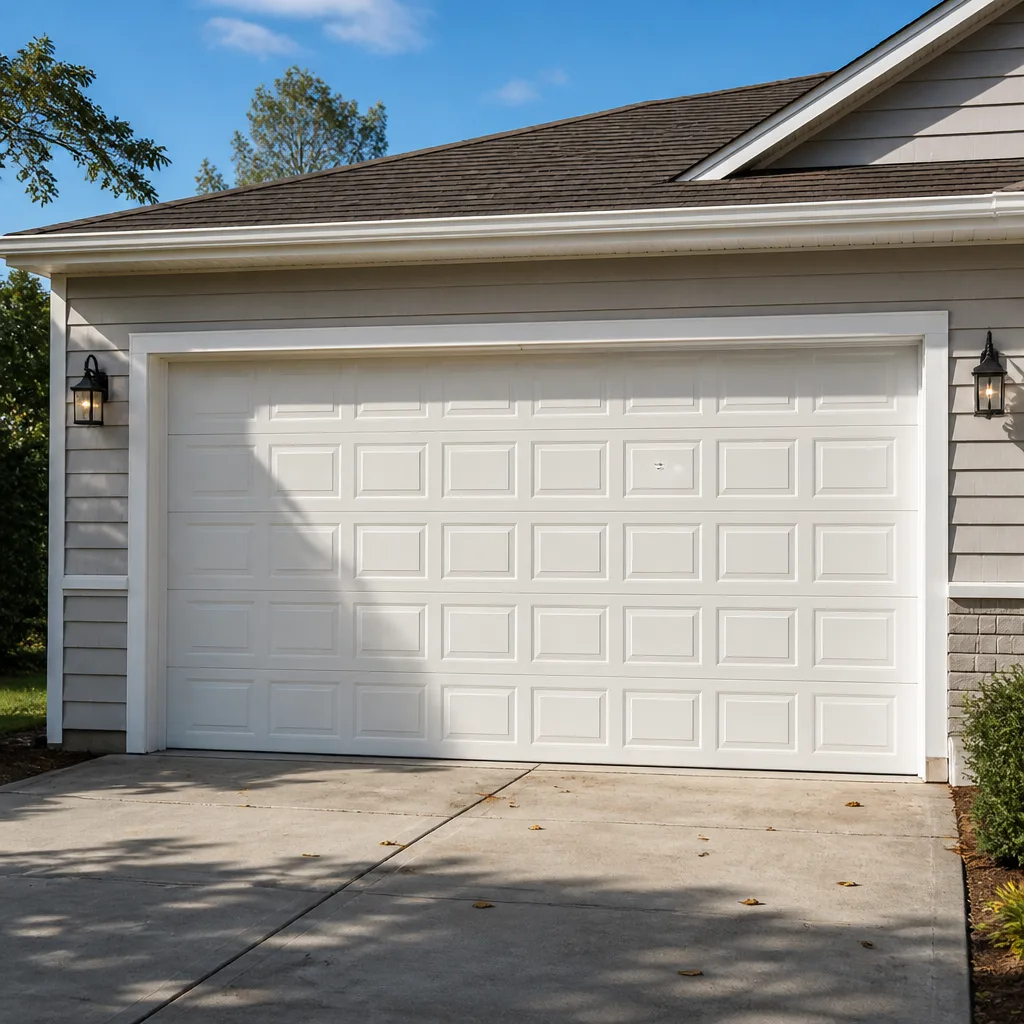 Raised-panel steel
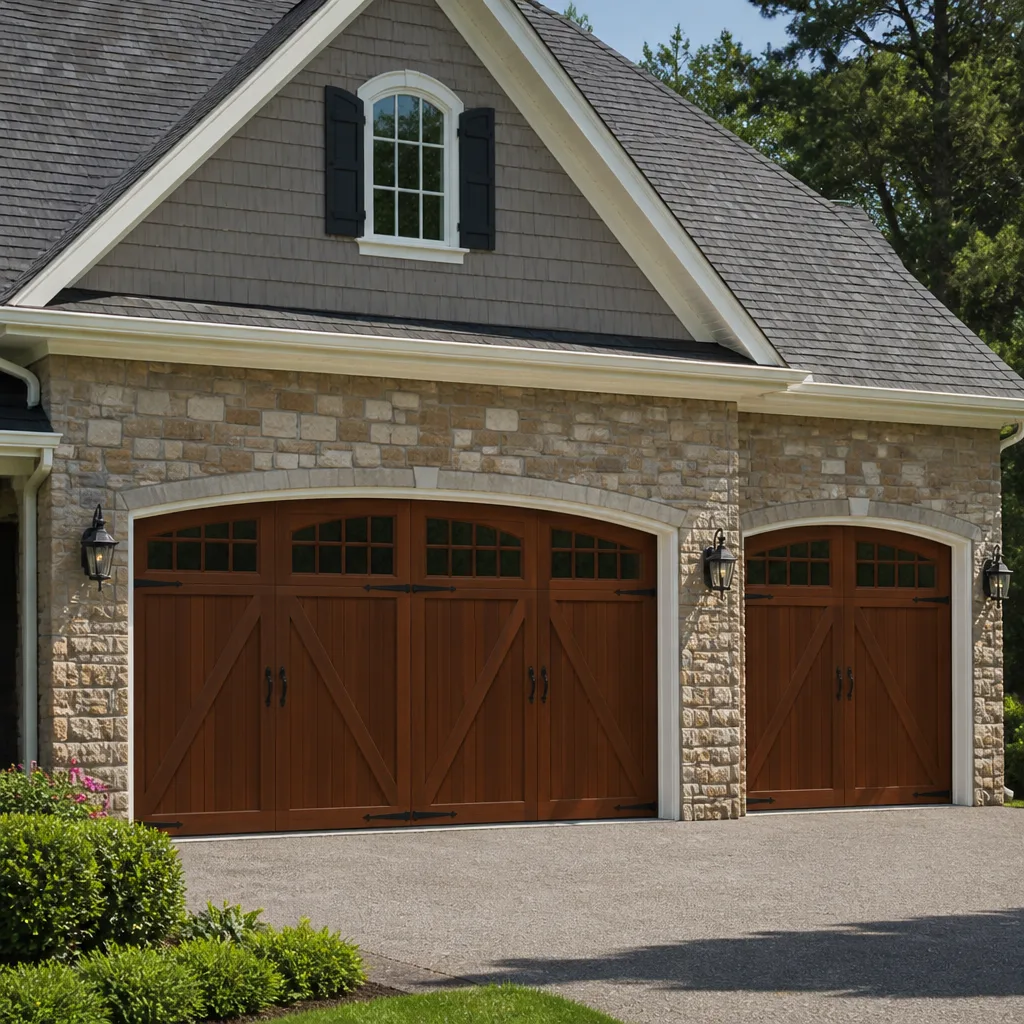 Carriage house
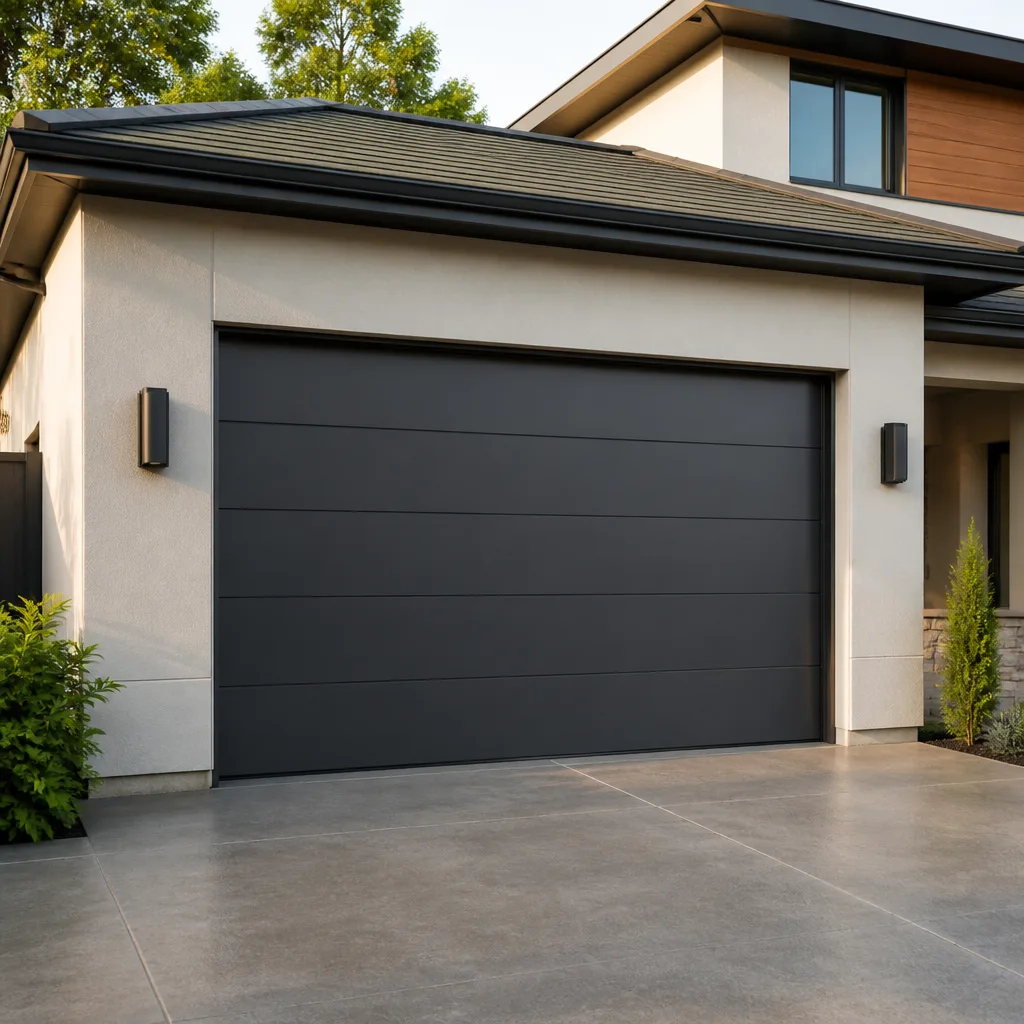 Modern flush
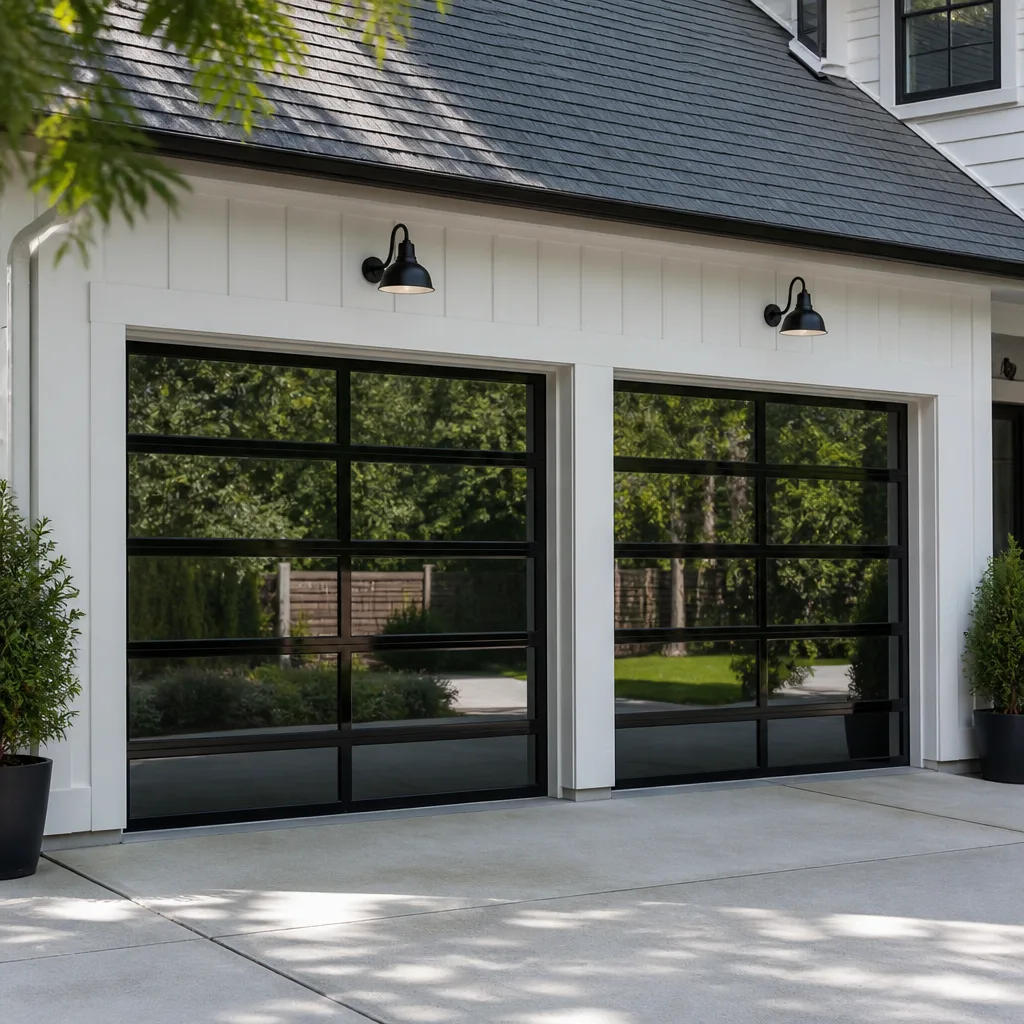 Full-view glass
 LiftMaster openers
 Chamberlain openers
Full 25-point door and opener safety check with every visit - springs, cables, rollers, tracks, and your LiftMaster or Chamberlain opener included
You get a price before we start. It does not change when the pro arrives.
Get your free estimateGarage Door Permits, Codes & Inspections in Coral Springs, FL: What You Need to Know
Swapping a tired garage door for a new one in Florida feels like a straightforward home improvement. Order the door, book the install, done. But here in Broward County, the paperwork often tells a different story. Any change to a door’s wind-load rating or its dimensions can pull a permit and an inspection into the process, even when the new door looks almost identical to the old one. Homeowners in Coral Springs get caught off guard by this more often than you’d think, especially after buying a home where the last owner did the work quietly and skipped the permit. This guide lays out exactly what triggers a permit, what doesn’t, and how to fix past work that never went through the county.
Quick Answer
In Coral Springs, a garage door repair that keeps the same door, same size, and same wind-load rating usually needs no permit. A full door replacement, a change in door dimensions, or a change in wind-load rating generally does require a permit and a Broward County inspection under the Florida Building Code. Opener-only work typically doesn’t need a permit either, unless the job touches the structure or the door’s rated assembly. If you’re unsure which side of the line your project falls on, ask the city’s building department before anyone orders materials.
Styles & brands we work with
- Raised-panel steel
- Carriage house
- Modern flush
- Full-view glass
- LiftMaster openers
- Chamberlain openers
Table of Contents
- Why Florida Treats Garage Doors Differently
- Permit or No Permit? The Decision Tree
- What a Broward County Inspection Actually Checks
- How Florida Building Code Shapes What You Can Buy in Coral Springs
- Insurance and Resale: What Unpermitted Work Costs You
- Fixing Past Unpermitted Work
- Working With a Contractor on a Permitted Install
- Common Mistakes to Avoid
Why Florida Treats Garage Doors Differently
Broward County sits inside what the Florida Building Code calls the High-Velocity Hurricane Zone. That designation isn’t just a label. It changes what any opening in a home’s envelope must be able to withstand, and the garage door is the largest opening in most houses. A garage door that fails in high wind doesn’t just damage the door. It lets pressure into the structure, and a pressurized house can lose its roof.
That’s why Florida treats a garage door more like a structural component than a cosmetic one. The code that governs wind-load requirements for garage doors runs through the Florida Building Code, and in Broward County the local amendments and product approval process add another layer on top. Every door installed on a home in Coral Springs has to carry a product approval that matches the design pressures for its specific location and the size of the opening.
Practically, that means the door you replace your old one with can’t just fit the frame. Its rated design pressure has to equal or beat what was required when the original assembly was approved. Go lower, and the county will flag it. Change dimensions, and the whole calculation may need to be redone. If you’re replacing an older door whose labels have worn off, the manufacturer’s product approval paperwork becomes the key document in the entire project. Our technicians work across Clopay, Amarr, Wayne Dalton, and Raynor doors regularly, and the paperwork trail matters as much as the hardware on permitted work in Coral Springs.
None of this is meant to scare you off a replacement. It’s just that Florida’s code treats a garage door replacement as a real construction event, and the process is a lot smoother when everyone understands that going in.
Permit or No Permit? The Decision Tree
Most of the confusion we hear about comes from lumping every garage door job into one category. Break it down by what actually changes, and the permit question usually answers itself.
Repairs that typically don’t need a permit
- Spring replacement on an existing door assembly
- Opener replacement where the door itself and its rated assembly stay untouched
- Panel replacement where the new panel matches the original by manufacturer and part number and the door’s wind-load rating stays unchanged
- Roller, hinge, track, and cable replacement
- Sensor and safety-reverse adjustments
Jobs that typically do require a permit
- Full door replacement, even with a “like for like” panel choice, if the door’s wind-load rating or dimensions change at all
- Any change to the opening’s dimensions
- New construction or a new opening cut into the structure
- Reinforcing or replacing the door’s structural supports
- Any job where you can’t produce a product approval matching the design pressures
Where it gets murky
Panel swaps are the classic gray zone. On paper, matching a panel by manufacturer and part number may not change the assembly’s rating at all. In practice, once a door has aged, finding that exact match can be tough, and a slightly different panel can trip a permit requirement. If you’re swapping more than a single small section, check with the city before you buy. That ten-minute phone call is cheaper than a stop-work order.
Opener work is usually clean. Installing a new LiftMaster or Genie unit on its own rarely needs a permit. But if installing the opener means drilling into structural members, changing the track layout, or adding supports, the answer flips. Get the installer’s read before they arrive if you want to avoid a surprise.
What a Broward County Inspection Actually Checks
The inspection is short. Usually 15 to 30 minutes. But a surprising number of installs fail the first pass over a handful of small, fixable issues. If you know what the inspector looks for, you can verify the work yourself before anyone comes out. Here’s the checklist in order.
- Product approval paperwork. The installed door’s product approval has to be on file and match the design pressures for the opening. The label on the door is the first thing checked.
- Door anchoring and fasteners. Every bracket and anchor that ties the track and door assembly to the framing must be the right fastener for the application and torqued to spec.
- Wind-load hardware. Reinforcing struts, hinges, and jamb brackets have to be installed as the approved system specifies. Substituting hardware voids the approval.
- Balance and operation. The door should open and close smoothly, stay at the halfway point when opened manually, and not drop or hang up on one side.
- Safety reverse and sensors. For the inspection to pass, a contact reverse test and a non-contact safety sensor test both have to function.
- Latch and lock. Any manual lock or slide bolt needs to be present and functional if the original assembly includes one.
- Clearance and framing. The opening needs the required framing, a proper header, and no gaps that compromise the envelope.
Most failed inspections come down to paperwork problems or mismatched hardware, not structural issues. When we work a Coral Springs replacement, we pull the product approval sheet before the door arrives and match it to the label on the installed unit. That single practice prevents the majority of inspection issues.
How Florida Building Code Shapes What You Can Buy in Coral Springs
The High-Velocity Hurricane Zone designation isn’t a formality. It means every garage door sold into Coral Springs has to be tested and rated for high-wind loading, and each home’s specific design pressures drive which doors qualify. Two homes on the same block can require different products if the geometry of their openings differs.
What does that mean when you’re shopping? A few practical rules:
- Any door you’re considering should have a current product approval number. If the seller can’t produce it, move on.
- The design pressure rating on the door has to equal or exceed what’s required for your home’s exposure. An inspector can’t fudge that, and neither can we.
- Impact-rated glazing changes the calculation, so a door with windows and a door without windows of the same model often have different ratings.
- Some brands have their Florida approvals organized more cleanly than others. Clopay and LiftMaster approvals are usually straightforward to source; older or discontinued doors sometimes require extra digging.
- Cosmetic features like carriage-house styling don’t change the numbers, but they can change the price. That’s fine as long as the structural specs stay put.
When we quote a Coral Springs replacement, we note the required design pressure and the candidate product approval either match or don’t. Then the homeowner gets a real decision, not a sales pitch. Our technicians have up to 15 years of experience working across brands, and the approval hunt is second nature by now. Some jobs are simple paperwork. Others require a specific door because the home’s opening only accepts a narrow window of approved products.
Insurance and Resale: What Unpermitted Work Costs You
Homeowner’s insurance and garage doors interact in a way most people don’t consider. Insurers care about wind mitigation for the same reason Broward County does: a failed garage door assembly can lead to catastrophic structural damage in a windstorm. If a door assembly wasn’t permitted and doesn’t match what’s on the property’s construction records, insurers see risk they didn’t price for.
That can mean a handful of things at claim time:
- A claim tied to a failed unpermitted door may face more scrutiny than one attached to a properly permitted install.
- Wind mitigation credits often assume standardized, approved assemblies. Missing paperwork can complicate those credits.
- Coverage denial is possible if an adjuster determines work was completed in a way that voided the home’s rated assembly. We can’t speak to any specific policy, but we can tell you it comes up often enough to matter.
On the resale side, Florida’s residential property disclosure requirements put the burden on sellers to disclose known issues and any work performed without the necessary permits. Buyers’ inspectors look for the permit record on any major garage door replacement. When the record doesn’t exist, the deal gets renegotiated, or the buyer walks. A permit record might feel like a bureaucratic annoyance during the project, but it’s a real asset at resale.
If you’re preparing to sell a home in Coral Springs and aren’t sure whether an old garage door replacement was permitted, check the county’s permit records before you list. It takes minutes, and it’s far cheaper to learn about a missing permit then than during a deal’s inspection period. We’ve seen a Coral Springs homeowner’s list-day stress turn into weeks of back-and-forth when a paperwork gap surfaced late.
Fixing Past Unpermitted Work
Buying a home with an unpermitted garage door isn’t the end of the world. Broward County has a process for retroactively permitting previously unpermitted work, and it’s less intimidating than it sounds. It usually comes down to proving the installed assembly actually meets the code that applied when it was put in.
The typical path looks like this:
- Call the city’s building department. Explain that you’ve discovered unpermitted garage door work on the property and ask what the process is for a permit after the fact.
- Gather records on the installed door. Manufacturer, model, product approval number, and any labels that remain on the assembly. Photographs help.
- Determine whether the installed door meets the design pressures. If it does, the process is largely paperwork and an inspection.
- File the permit application as a completed installation. The city will tell you the exact form and fee.
- Schedule and pass the inspection. Same checklist, same standards as a fresh install.
- If the door doesn’t meet the design pressures, the fix is to replace it with a compliant model through a permitted install.
Processing timelines vary by workload, so ask the city’s building department how long to expect. The important thing to know is that the after-the-fact option exists, and it’s often cheaper than an unpermitted-door discount at resale. If you’ve bought an existing home in Coral Springs where the previous owner did the door themselves, this is the path.
We’ve walked many Coral Springs homeowners through retroactive permits, and the hardest part is usually the paper trail. Once we have the manufacturer and model, the rest is mostly patience. Problems with the door itself, like a failing torsion spring from an aging install, need their own attention; that’s a separate repair and doesn’t get tangled up with the permit itself.
Working With a Contractor on a Permitted Install
A permitted replacement runs on a different rhythm than a repair. Because the door is being ordered to spec and paperwork has to line up with the city, the install is measured and scheduled, not dispatched. Nobody’s rolling out same-day on a permit job, and any contractor promising same-day replacement in Coral Springs is either misunderstanding the code or hoping you won’t ask.
Here’s what a well-processed Coral Springs replacement looks like:
- Measure the existing opening, note the design pressures from the home’s construction records, and confirm the framing condition.
- Select a door whose product approval exceeds the required design pressures for that opening, factoring in any glazing option.
- Confirm whether a permit is required and pull it with the city if so.
- Order the door. Lead times vary; the installer should give you an honest window based on the manufacturer.
- Install per the manufacturer’s system, keeping the approved hardware intact.
- Coordinate the inspection, attend it, and clear any items the inspector flags.
We build the paperwork into the quote from the start. If the project requires a permit, your written estimate says so, and the price you agree to before work starts includes that step. If the door you want doesn’t meet the design pressures, we tell you that before you pay a deposit. Repair-first is the default whenever a repair will do the job, and full replacement is treated as the bigger, more careful decision it is. When repairs are what’s called for, that’s usually a same-day conversation; our garage door repair service handles tune-ups, panel swaps, and track alignment on nearly any system you already own.
Common Mistakes to Avoid
- Assuming any like-for-like door swap is permit-free. Even a visually identical replacement can trip a permit if the wind-load rating or dimensions change. Check the product approval before you order the door.
- Buying a door without checking its Florida product approval. A door sold at a big-box store may be fine for other states and unfit for Broward County. Ask for the approval number and confirm it matches your home’s design pressures.
- Relying on a handyman for a permitted install. Permitted jobs in Coral Springs require proper licensing and an inspection, and a handyman without the correct credentials can’t pull the permit. That leaves the work unpermitted by default.
- Skipping inspection because the door “looks fine.” Aesthetics don’t predict wind performance. An inspection catches the hardware, anchoring, and labeling issues that matter.
- Missing the disclosure when selling. Florida residential property disclosure requirements put the responsibility on the seller to disclose unpermitted work. Skipping it invites litigation after closing.
- Assuming past unpermitted work is unfixable. Broward County’s retroactive permitting process is a real path forward. Call the building department and start the conversation rather than ignoring the problem.
- Forgetting the opener’s role in the safety test. Inspection day isn’t just about the door; the opener’s contact reverse and safety sensors are tested. If the unit is a failing Chamberlain or an older Genie, get it serviced or replaced before the inspector arrives.
See the difference
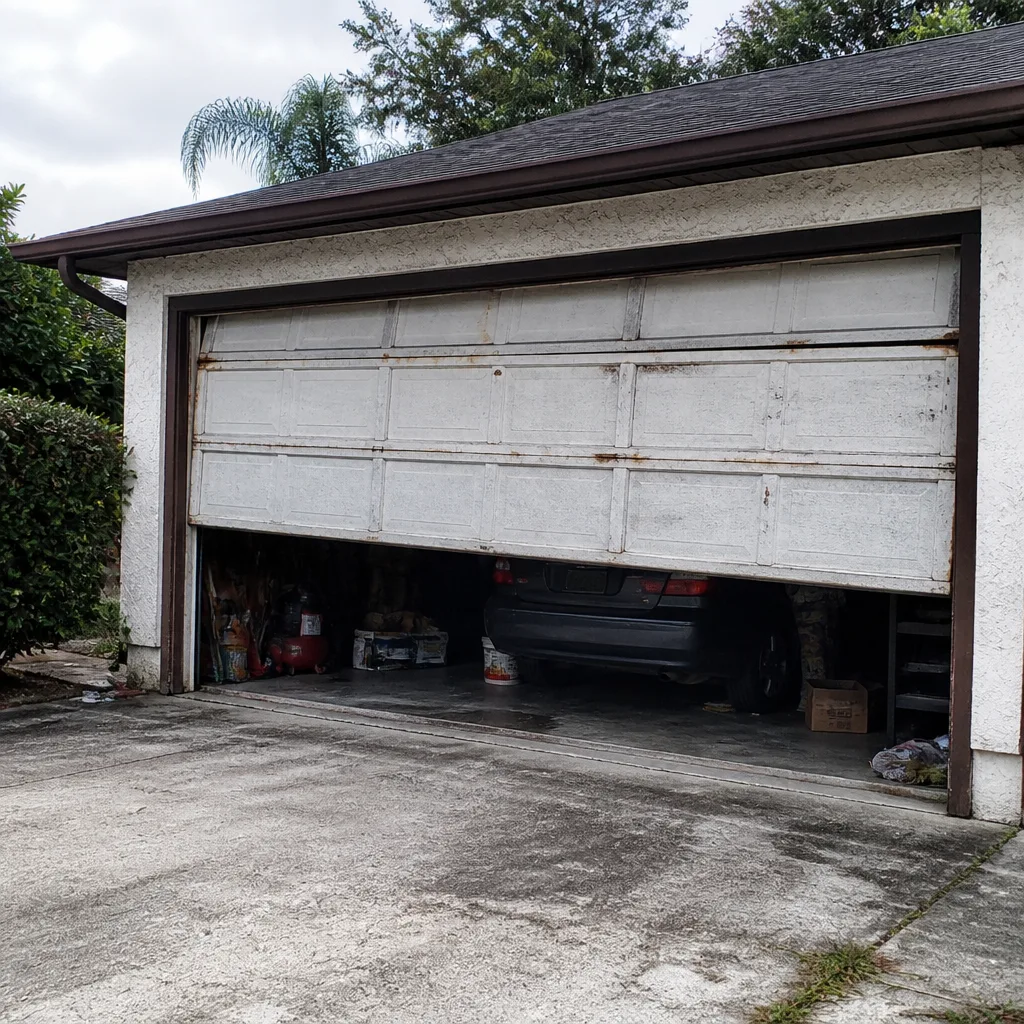 Before
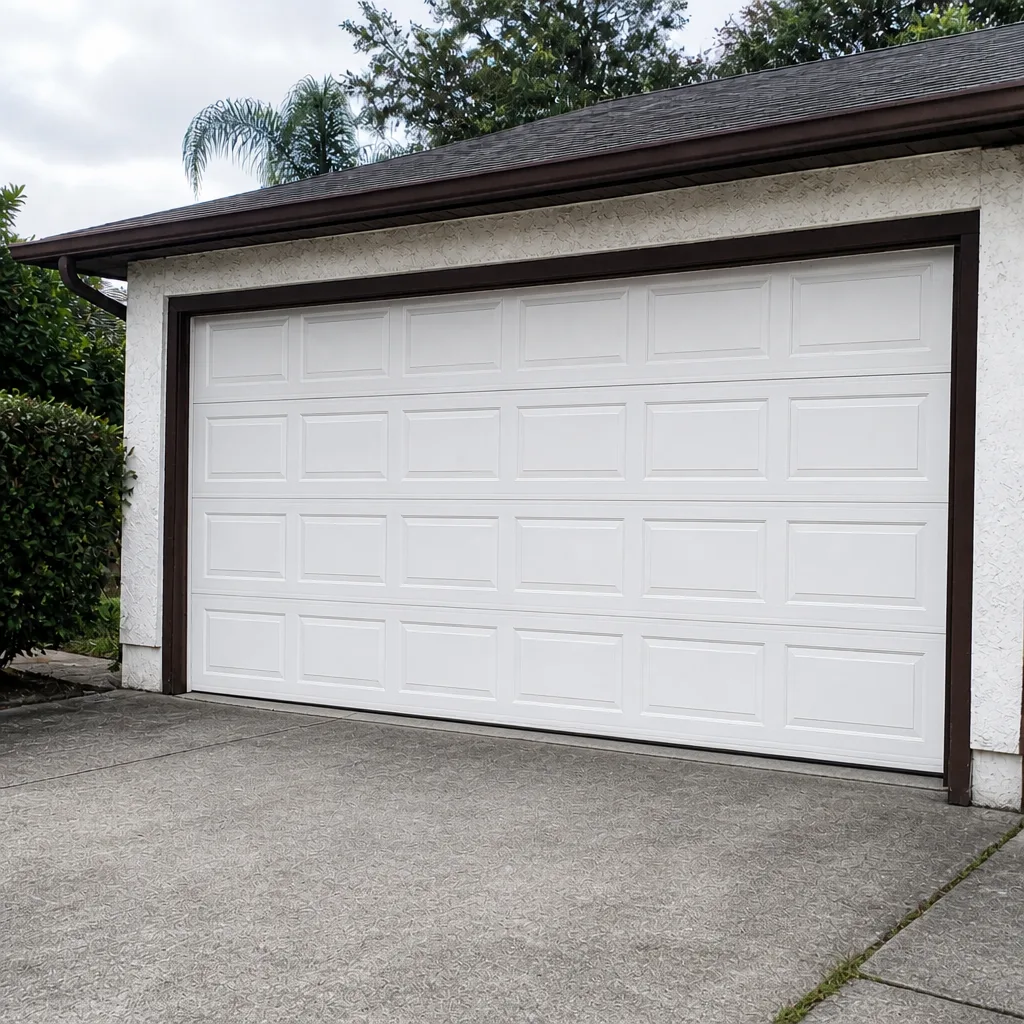 After
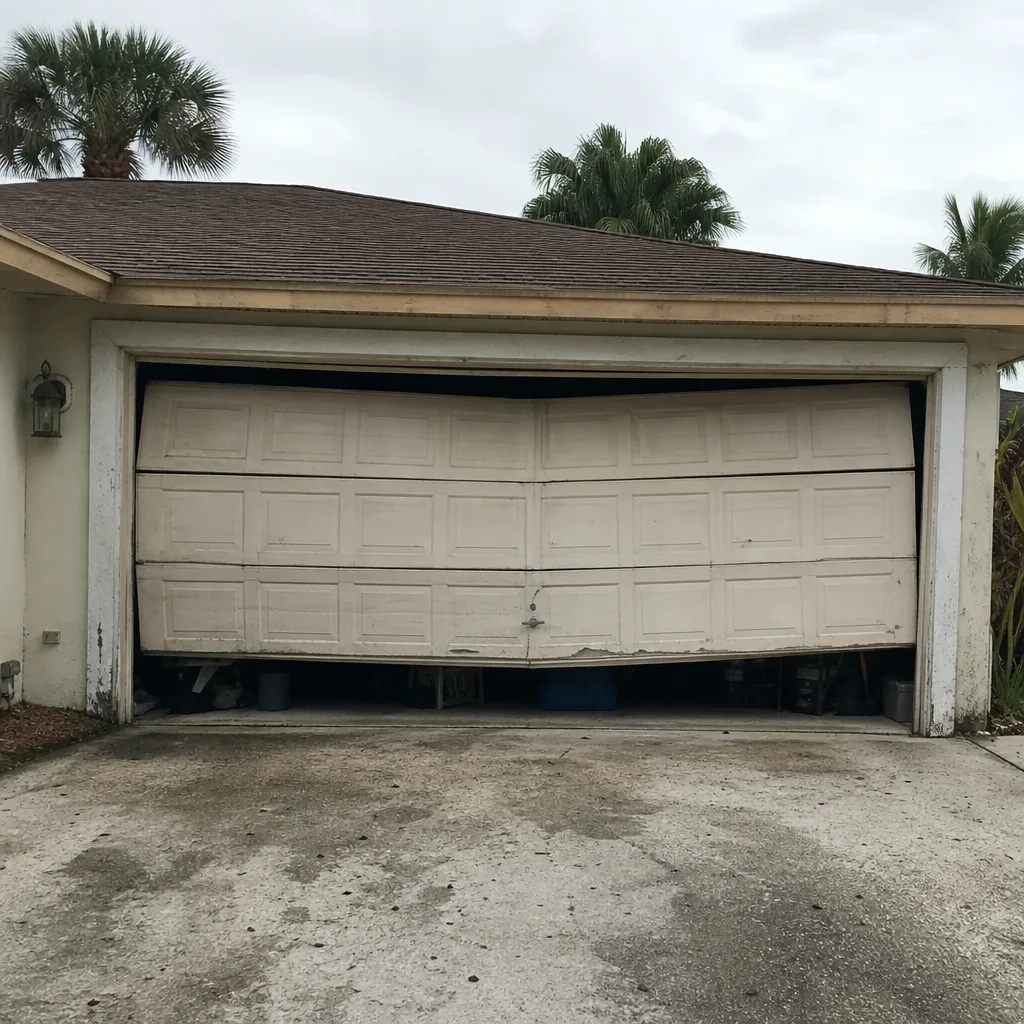 Before
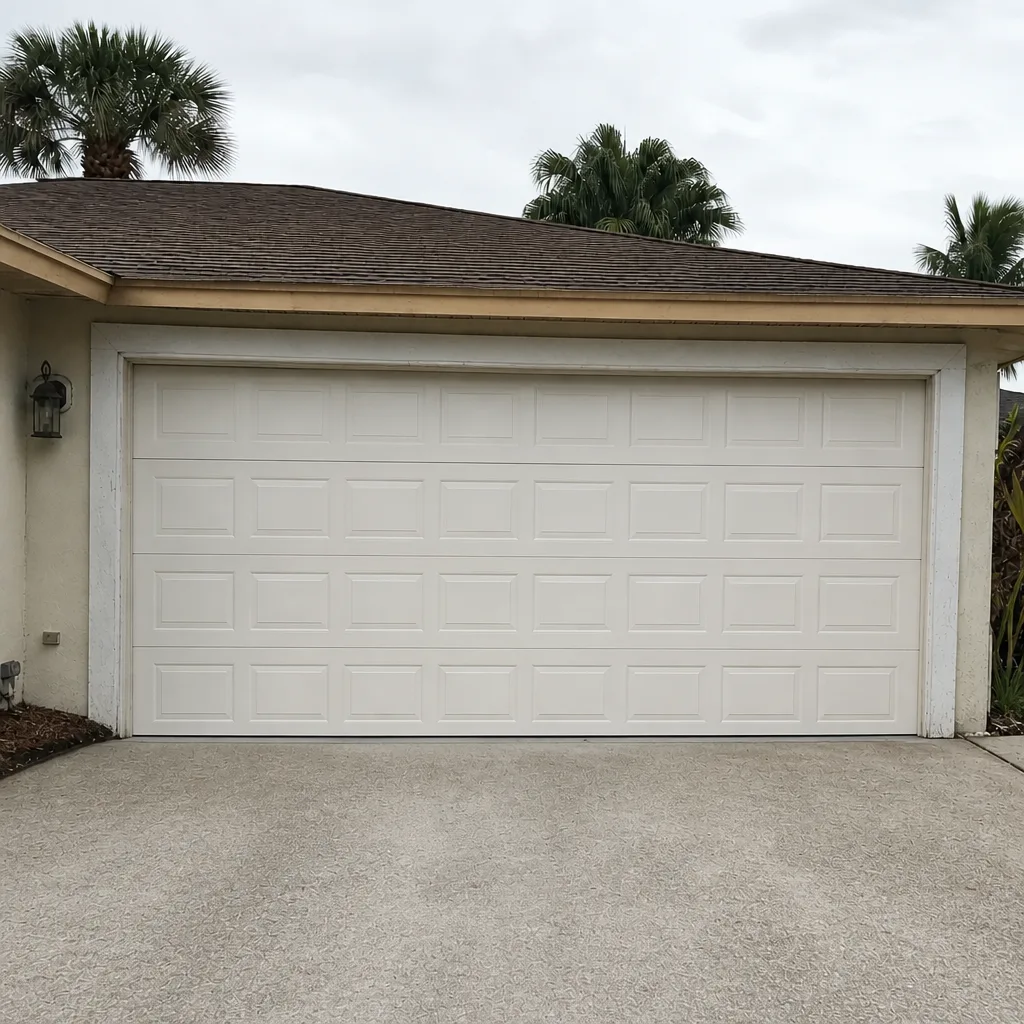 After
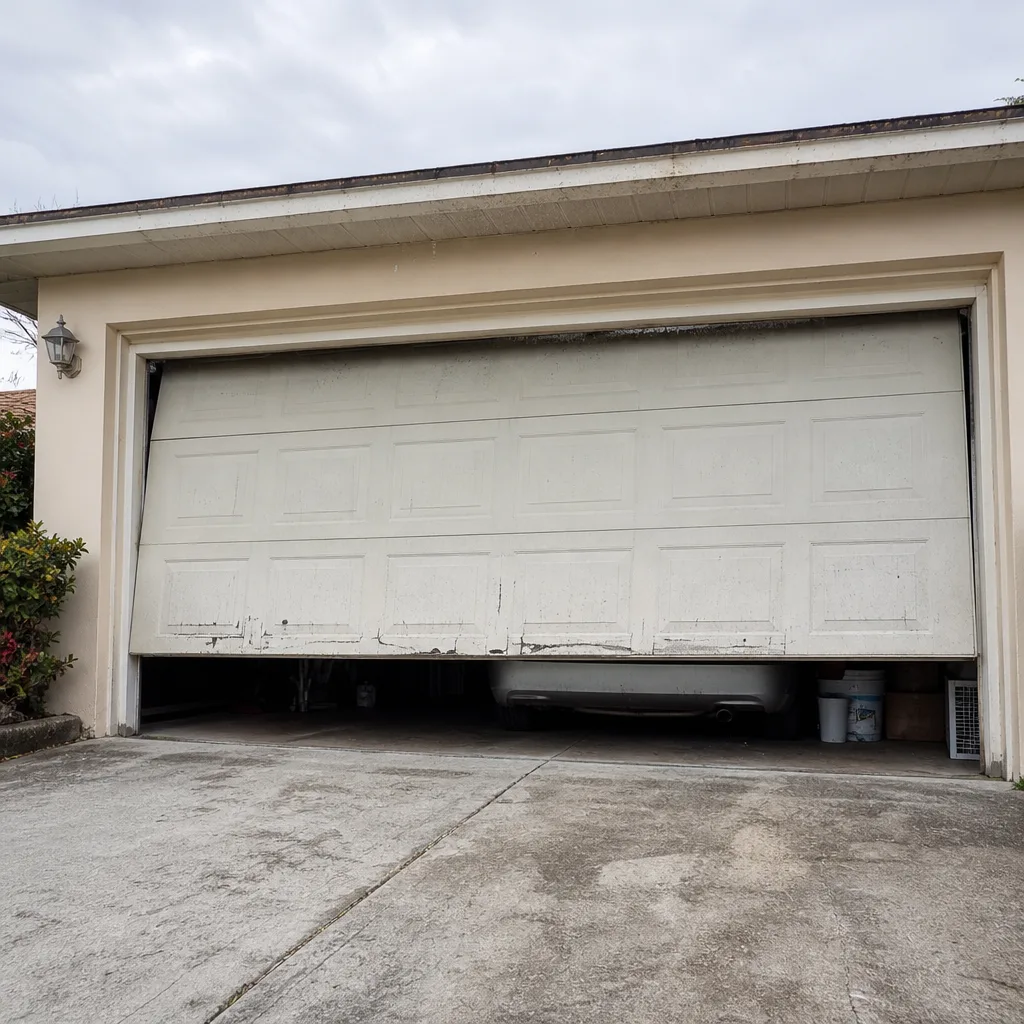 Before
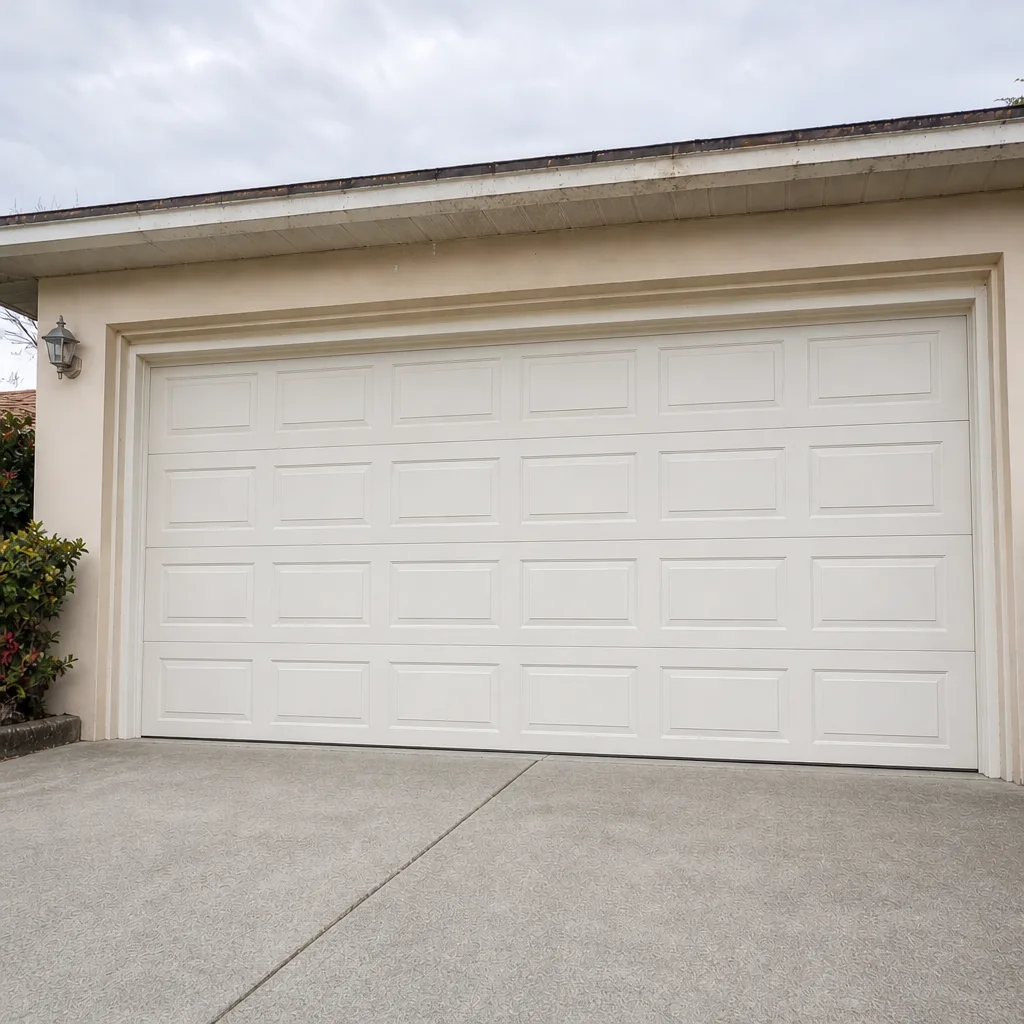 After
When to Call a Professional
Some of this work is safely within reach of a confident homeowner. Checking whether your door has a product approval label, photographing existing hardware, and calling the city about permit history are all fair game. But any job that involves the torsion spring, the tracks, the anchoring, or the opener’s internal components should be handled by a trained technician. Torsion springs are under extreme tension and can cause serious injury if released incorrectly; winding, unwinding, or adjusting them is not something to attempt without proper tools and training. The electrical side of opener work is best left alone too. When you need someone onsite, we offer free estimates in Coral Springs: call (855) 697-3734. We answer 24/7, and fast dispatch runs from 7am to 7pm, Sunday through Friday. If a door won’t open or close and you’re not sure whether the problem is mechanical or the opener itself, our garage door opener repair covers the electronics, and our garage door spring repair covers the mechanical side. One call, one visit, whether it’s a failing spring or a dead motor.
Frequently Asked Questions
Usually yes, if the replacement changes the door’s wind-load rating or its dimensions, which are the two triggers Broward County watches most closely. A same-product, same-dimension swap can sometimes go without a permit, but the wind-load rating has to be verifiable, and in practice the paperwork is required for most full replacements. Opener-only installs typically don’t need a permit unless the install touches structural members. Call (855) 697-3734 for an exact quote on your specific project; estimates are free.
Timelines vary with the city’s workload, so the building department is the only reliable source for a current estimate. That said, the door’s product approval usually has to be sourced before the application goes in, and ordering the actual door has its own lead time on top. Factor both into the project schedule. If you want help pulling the paperwork together, call (855) 697-3734; estimates are free.
Broward County can require you to permit the work after the fact, and if the installed door doesn’t meet the design pressures, the fix may be a replacement with a compliant model. Beyond the county side, an unpermitted install can complicate homeowner’s insurance claims tied to a wind event and triggers a disclosure requirement when you sell. Call (855) 697-3734 for a free estimate on a compliant replacement.
Opener-only installs generally don’t need a permit. The line is crossed when the work involves changing the door assembly, adding structural reinforcement, or altering the opening. If you’re planning a LiftMaster or Genie replacement on the same door and just want the motor swapped, you’re usually clear. When in doubt, call (855) 697-3734 for an exact quote on the job.
Yes, in most cases. Broward County has a process for retroactive permitting of unpermitted work, and it typically comes down to proving the installed door’s product approval matches the required design pressures for your home. If it does, the process is mostly paperwork and an inspection. Call (855) 697-3734 for a free estimate and we’ll help you assess what’s needed.
It can affect both. Insurers weigh wind mitigation and rated assemblies carefully, and missing paperwork can complicate claims tied to a wind event. Florida’s residential property disclosure requirements also put the burden on sellers to disclose unpermitted work, and a buyer’s inspector will look for the permit record. Clearing the issue through retroactive permitting is usually the cleanest path. Call (855) 697-3734 for a free estimate on the repair or replacement side.
The Bottom Line
Garage doors in Coral Springs live under Florida Building Code rules that treat them as structural, not cosmetic. A same-product, same-dimension repair is usually permit-free. A full replacement, a change in dimensions, or a change in wind-load rating generally needs a permit and an inspection. Product approvals have to be sourced before you buy the door, and inspection day checks anchoring, hardware, and safety reverse just as carefully as the label. If you’ve got unpermitted work from a previous owner, the county’s retroactive permitting process is a real fix, not a dead end. When you’re ready for someone to help sort it out, our Coral Springs Garage Door Repair Pros team is one call away.
Call (855) 697-3734 for a free estimate. We answer 24/7. Fast dispatch from 7am to 7pm, Sunday through Friday. The price you agree to before work starts is the price you pay on the job.
Written by the team at Coral Springs Garage Door Repair Pros.